


Ruian Chuangbo Machinery Co., Ltd. is specialized in manufacturing of machinery parts.
Tension drift mid-run, torque that softens after the machine has been operating for an hour, a housing that is noticeably hotter than it should be — these are symptoms that experienced engineers recognize immediately, and they almost always trace back to heat. If you are specifying or troubleshooting a Magnetic Powder Brake Manufacturer product for a continuous-duty winding or unwinding application, the thermal behavior of the brake is not a secondary consideration. It sits at the center of whether the device will hold torque reliably across the full production cycle or gradually degrade until the line needs to stop. Understanding the difference between heat resistance as a design characteristic and overheating as an operational failure mode shapes how these devices should be selected, installed, and managed.
Where Does Heat Come From in a Magnetic Powder Brake?
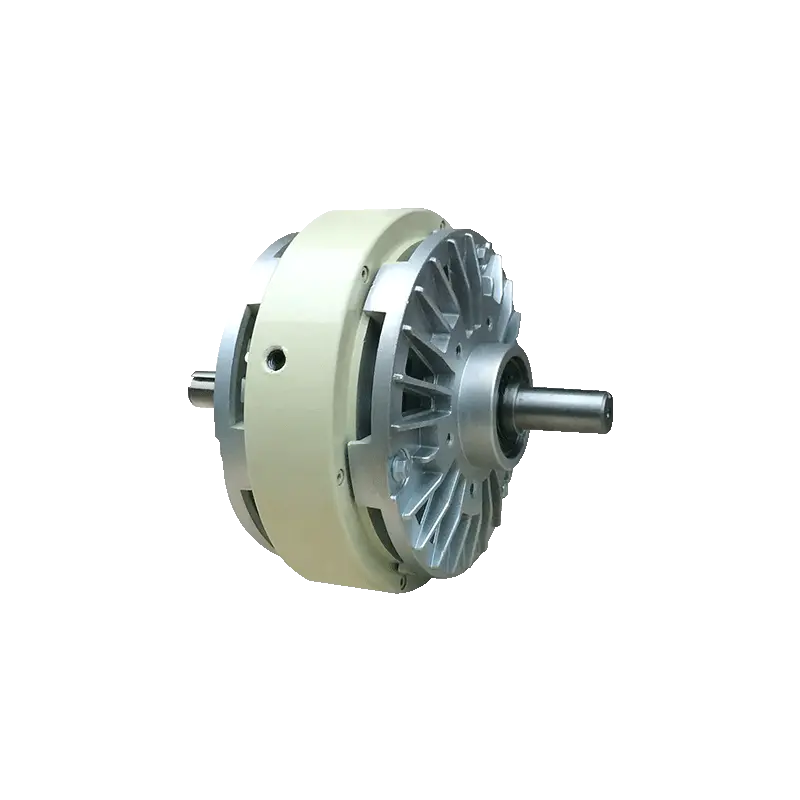
Slip Rotation Is the Source
A Magnetic Powder Brake generates torque by transmitting force through magnetized powder between a rotating input and a stationary or slower-moving output. The rotational difference between these two elements — the slip — is what produces the braking effect. It also continuously converts mechanical energy into heat.
The faster the slip rotation and the higher the torque being applied, the more heat is generated per unit of time. This is not a defect. It is the physical consequence of how the device operates.
Continuous Duty Compounds the Problem
In an intermittent application — short braking cycles with recovery time between them — the heat generated during each cycle dissipates before the next cycle begins. The thermal load on the powder and the housing stays within manageable bounds.
In a continuous-duty application — sustained unwinding, constant tension control, high-speed film or wire processing — the heat input is ongoing and the recovery opportunity is limited or absent. Temperature climbs steadily unless the cooling capacity of the design keeps pace with the heat input rate.
Current Does Not Add Torque Indefinitely
A point that frequently causes operational problems: above the rated current for a given torque, additional current does not produce additional useful braking force. It produces additional heat. Operating beyond the rated point does not give more torque — it gives more temperature. The device appears to be working harder while actually degrading the powder and stressing the housing.
What Does Overheating Actually Do to the Brake?
Powder Degradation Begins with Temperature
The magnetic powder is the functional core of the device. At normal operating temperatures, the powder particles form and release chains under electromagnetic control, producing smooth and predictable torque. At elevated temperatures, the powder begins to oxidize. Oxidized powder has reduced magnetic response — the same current produces less torque than it did before, and the relationship between current and torque becomes less linear.
This degradation is cumulative. A brake that has been routinely overheated will not perform the same as a new unit at the same settings. The powder's condition directly determines the device's ability to maintain consistent tension.
Torque Instability Under Heat
As the powder degrades or as the housing temperature rises toward the thermal limit, torque output becomes less stable. Tension control systems that rely on a predictable current-to-torque relationship encounter drift that cannot be corrected by adjusting the current signal alone. The instability originates inside the brake, not in the control system.
In precision web handling, coating, or laminating applications, this drift translates directly into product quality variation — inconsistent tension across a roll, registration errors, or uneven coating weight.
Bearing and Seal Wear
Heat migration from the powder chamber into the bearing zone reduces lubricant viscosity and accelerates wear. Seals harden and crack under sustained thermal stress. These failures develop gradually but eventually affect the mechanical integrity of the device rather than just its torque performance.
Heat Resistance vs. Overheating Risk: Two Different Questions
These are related but distinct considerations, and conflating them leads to selection errors.
Heat resistance refers to how well the device is designed to operate at elevated temperatures — the materials used in the housing, the powder chemistry, the insulation rating of the coil, and the thermal margin built into the design. A device with high heat resistance can sustain a higher continuous operating temperature without degradation.
Overheating risk refers to whether the operating conditions will push the device above its thermal limits. A device with high heat resistance is not immune to overheating if the duty cycle, slip speed, or ambient conditions generate heat faster than the device can dissipate it.
Both matter — but overheating risk is the more actionable concern during selection and installation. A thermally robust device specified for conditions that exceed its dissipation capacity will still overheat. A modestly rated device correctly matched to its application and properly cooled will not.
How Operating Conditions Determine Thermal Load
| Factor | Effect on Heat Generation | Selection Implication |
|---|---|---|
| Slip speed (difference between input and output rotation) | Higher slip produces more heat per unit time | High-speed applications require greater cooling capacity |
| Applied torque level | Higher torque at the same slip increases heat input | Operating near rated torque continuously raises thermal load |
| Duty cycle | Continuous operation leaves no recovery time | Continuous-duty applications need designs rated accordingly |
| Ambient temperature | Higher ambient reduces the temperature differential available for heat transfer | Hot environments require derated operation or active cooling |
| Airflow around housing | Restricted airflow limits natural convection cooling | Installation clearance affects thermal performance |
Does Cooling Method Change the Risk Profile?
Yes — significantly. The cooling approach built into or applied to the brake determines how quickly heat leaves the system, which determines how high the operating temperature stabilizes under a given load.
Air-Cooled Designs
Air-cooled Magnetic Powder Brakes rely on natural convection or forced-air flow to remove heat from the housing surface. They are suitable for applications with moderate duty cycles and adequate airflow around the mounting location.
In practice:
- Adequate clearance around the housing is required — mounting in a confined enclosure without airflow undermines the cooling performance
- Forced-air cooling through a directed airstream can extend the continuous-duty capacity beyond what natural convection achieves
- Ambient temperature directly affects performance — the same device runs hotter in a 40-degree environment than in a 25-degree environment
Water-Cooled Designs
Water-cooled versions route coolant through channels in the housing, removing heat through direct fluid transfer rather than surface convection. The heat removal rate is substantially higher than air cooling, which allows sustained operation at higher duty cycles and higher torque levels without exceeding thermal limits.
Water-cooled designs are appropriate when:
- The application involves genuinely continuous operation with limited or no rest cycles
- High torque at moderate-to-high slip speeds generates heat faster than air cooling can remove it
- Consistent torque performance across a full production shift is required, not just at the start of the run
The trade-off is installation complexity — coolant supply and return connections are required, and the coolant system must be maintained.
What Happens When the Thermal Limit Is Exceeded?
Immediate Effects
When operating temperature exceeds the rated thermal limit, several things happen in sequence. The powder's magnetic properties degrade, producing torque instability. The coil insulation experiences accelerated stress. If the device has a thermal protection cutout, it may trigger — stopping the brake and requiring cooling before it can be reset.
In applications without thermal protection, the device simply degrades in place while appearing to function. This is the more dangerous failure mode because it is invisible until the product quality problem becomes obvious.
Long-Term Effects
Repeated thermal excursions accumulate damage that does not reverse when the device cools. Each overheating event shortens the service life of the powder, the coil, and the seals. A brake that has been regularly overheated will need earlier replacement than one that has been operated within its thermal envelope.
For operations with high equipment replacement costs or downtime sensitivity, this accumulated damage represents a real production cost that rarely appears in upfront purchasing comparisons.
How Should Thermal Considerations Drive Selection?
Define the Duty Cycle Honestly
A common thermal selection error is specifying a device for intermittent duty when the application will actually run continuously. The rated torque values on product specifications often reflect intermittent operation. Continuous-duty ratings are lower, and specifying based on the wrong rating will produce a device that overheats in normal use.
Before selecting, define:
- How many hours per shift the brake will be under active torque load
- Whether there are recovery periods or whether the line runs without stopping
- What the slip speed will be during normal operation
Build in Thermal Margin
Operating a brake at its rated limit continuously leaves no buffer for ambient temperature variation, production rate changes, or component aging. A device sized to operate at a meaningful margin below its thermal limit handles these variations without reaching the degradation threshold.
This margin does not need to be large — but it needs to exist. A brake pushed exactly to its rated limits in ideal conditions leaves no room for anything outside ideal conditions.
Match Cooling Approach to Application Demands
For moderate-duty applications in well-ventilated environments, air cooling is appropriate and simpler. For continuous-duty, high-speed, or high-torque applications, forced air or water cooling is not an optional upgrade — it is a requirement for sustained performance. Specifying an air-cooled device for a continuous-duty application and expecting it to hold performance is a common and predictable failure path.
Installation Practices That Reduce Thermal Risk
Even a correctly specified brake can develop thermal problems from installation choices.
- Maintain clearance around the housing: Natural convection requires space for air to circulate. Mounting flush against a panel or in a tight enclosure without airflow direction cuts effective cooling capacity.
- Orient the cooling fins correctly: Many air-cooled designs have fins or housing geometry that is designed for vertical or horizontal airflow. Installing in the wrong orientation reduces convective efficiency.
- Monitor housing temperature in service: A simple temperature monitoring routine — checking housing surface temperature periodically during production — identifies developing thermal problems before they reach the powder degradation threshold.
- Do not chase torque loss with current increases: When torque seems insufficient, increasing the current signal is the instinctive response. If the torque loss is caused by powder degradation from heat, more current makes the problem worse rather than better.
The question of whether heat resistance or overheating risk matters more resolves differently depending on where the device sits in its application. Heat resistance is a design property — it determines how much thermal stress the device can handle. Overheating risk is an operational condition — it determines whether the actual use case exceeds that capacity. Both need to be considered together. A thermally robust Magnetic Powder Brake specified for an application that generates more heat than it can dissipate will still fail. A modestly rated device correctly matched to its duty cycle, properly installed, and adequately cooled will deliver consistent performance across its service life. Ruian Chuangbo Machinery Co., Ltd. manufactures Magnetic Powder Brakes and tension control components for industrial winding, unwinding, and processing applications, with configurations covering air-cooled and water-cooled designs across a range of torque capacities. If you are evaluating brake specifications for a continuous-duty application, comparing cooling configurations, or reviewing whether an existing installation is operating within its thermal envelope, reaching out to their technical team is a practical starting point for matching the device to the application's actual demands.
