


Ruian Chuangbo Machinery Co., Ltd. is specialized in manufacturing of machinery parts.
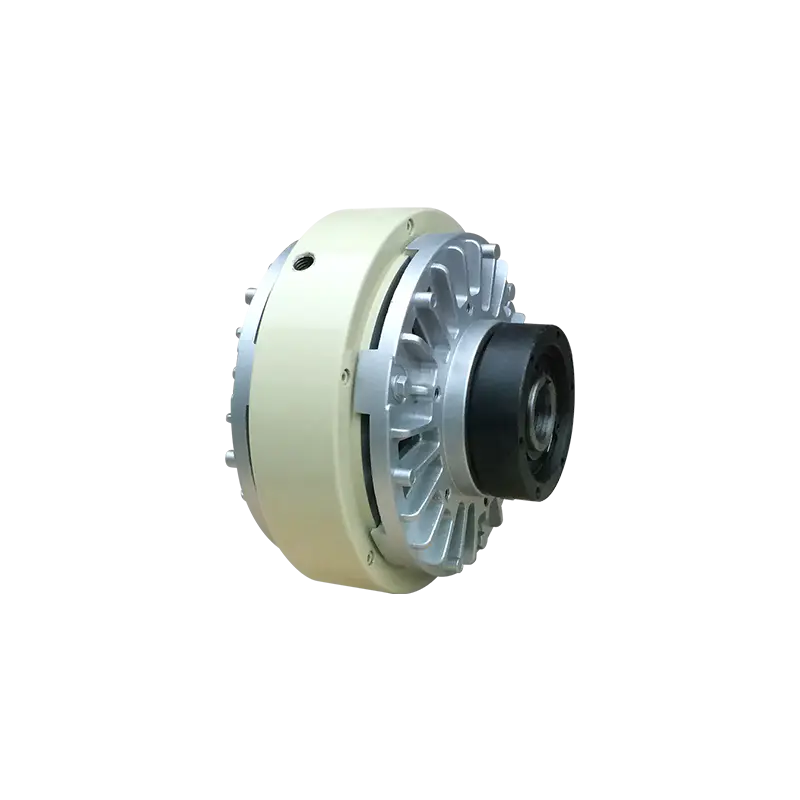
Registration errors that appear without warning, substrate wrinkling that interrupts a production run, tension drift that quietly worsens as the roll depletes — these are the quality problems that make tension control a genuinely difficult engineering challenge in printing lines. Finding a Magnetic Powder Brake Manufacturer with real experience in roll-to-roll printing applications is often where the resolution begins, because the brake is the component that stabilizes unwinding tension and gives everything downstream something consistent to work with.
Why Tension Control Sits at the Center of Print Quality
Tension Fluctuation Is the Root Cause of Many Registration Problems
In roll-to-roll printing — whether flexographic, gravure, or digital label work — the substrate travels from an unwind station through multiple print stations before reaching the rewind. At each station, ink lands at a specific position relative to a previous color or pattern. When web tension is inconsistent, the substrate stretches or relaxes unpredictably, and those relative positions shift.
That shift is registration error. In practice it shows up as color misalignment, blurred edges, or pattern drift that accumulates and compounds across a long run. The source is rarely in the print head or the ink formulation. It starts upstream, in the tension path.
How Roll Diameter Change Creates Drift You Cannot Ignore
Here is the tricky part of unwind tension: it does not stay constant on its own. As the roll depletes and its diameter shrinks, the same braking torque produces a different tension in the web — because that torque is now acting on a smaller radius. Apply fixed torque and tension climbs as the roll gets smaller.
Without active compensation, this drift runs continuously throughout the roll lifecycle. The early meters and the end meters of the same roll can run at different tensions, and the print quality reflects that difference across every job.
What a Magnetic Powder Brake Actually Does
The Core Operating Principle
A Magnetic Powder Brake transmits torque through a magnetic powder medium held between rotating components. When current flows through the coil, it creates a magnetic field that causes the powder particles to link into chains — forming a torque-transmitting connection. The torque output tracks the coil current continuously and can be adjusted across the full operating range without switching or stepping.
No direct metal-to-metal contact occurs in the torque path. The powder medium absorbs and transmits load smoothly, which produces the consistent, slip-free output that printing applications demand.
Why Smoothness Matters More Than Raw Torque Capacity
Printing substrates — paper, film, foil, label stock — react to sudden tension changes. A braking system that produces torque in steps, or exhibits stick-slip behavior during slow speed or direction transitions, creates tension spikes. Those spikes translate directly into substrate distortion at the print stations.
Because the Magnetic Powder Brake tracks the control signal continuously, tension in the web changes gradually rather than abruptly. During acceleration events, speed changes, and roll transitions, the substrate arrives at each print station at consistent tension. That consistency is what registration accuracy depends on.
Where Does It Fit in a Printing Line?
Unwind Station: The Primary Application
A typical installation puts the brake at the unwind station, where it provides resistance to the unwinding roll. As material pays off, the brake applies a retarding torque that creates tension upstream. A load cell or dancer roll monitors actual web tension; the controller compares that reading to the setpoint and adjusts brake current to compensate.
A few things matter here beyond just sizing the unit:
- The brake sits on the unwind shaft, directly or through a coupling — alignment and mounting rigidity affect performance
- Diameter compensation must be built into the control loop, otherwise tension will drift as the roll depletes
- Response speed determines how well the system handles acceleration and deceleration without tension overshoot
- The unit must handle continuous-duty braking across a full roll without thermal performance degradation
Intermediate Tension Zones in Multi-Color Lines
Longer printing lines with multiple print stations sometimes establish intermediate tension zones between stations to isolate each section. A brake or clutch combination at each zone boundary allows independent tension management, which becomes important when stations run at slightly different speeds or when coating or ink application between stations changes the substrate's mechanical behavior.
Closed-Loop Integration with the Tension Controller
The brake does not operate in isolation. It is one element in a closed-loop system — the controller measures tension, calculates the correction, and sends a current signal to the brake. The brake converts that signal into torque. For the loop to function well, a few properties are non-negotiable: linear torque-to-current relationship, fast response to current changes, stable torque at low speed without stick-slip, and consistent behavior across the operating temperature range.
How Does It Compare to Other Tension Control Approaches?
| Tension Control Method | Torque Smoothness | Speed Range | Closed-Loop Compatibility | Typical Application |
|---|---|---|---|---|
| Magnetic Powder Brake | High, continuous adjustment | Low to medium | Yes, direct current control | Unwind braking in printing and converting |
| Hysteresis Brake | Very smooth, torque by magnet gap | Low speed, light loads | Yes | Light web applications, instrumentation |
| Air-actuated Disc Brake | Stepped, less precise | Wide range | Indirect, pressure-based | Heavy unwind, large roll applications |
| Motor-regenerative Braking | Smooth, programmable | Wide range | Yes, full servo control | High-speed lines, precision web handling |
| Friction Clutch/Brake | Variable, prone to slip | Low to medium | Limited | Legacy systems, simple tension hold |
The Magnetic Powder Brake sits in a practical middle ground — smooth, continuously adjustable torque through a direct electrical signal, at a cost and complexity level that suits a wide range of printing configurations. Motor-regenerative systems offer more flexibility at higher speeds, but that additional capability comes with integration requirements that are not always justified for applications where Magnetic Powder Brakes already perform reliably.
What Changes at Higher Speeds?
Thermal Management Becomes the Constraint
At high operating speeds or under sustained heavy braking loads, energy absorbed by the brake generates heat. When the brake runs hot, the magnetic properties of the powder medium shift — torque linearity changes, and the relationship between control current and output torque starts to drift.
Managing this in high-speed printing applications comes down to a few practical steps:
- Select a unit with a torque rating that leaves room above the continuous operating load — running at the edge of capacity invites thermal problems
- Ensure adequate airflow around the brake housing; enclosed installations trap heat
- Monitor operating temperature in duty-cycle-heavy applications
- Consider water-cooled variants where ambient conditions or run length would otherwise push the unit beyond its thermal limits
Response Speed and Tension Recovery After Disturbances
During a splice, an acceleration ramp, or a speed change, web tension is disturbed. How quickly the brake can change torque output in response to a new current command determines how fast the control loop restores tension to setpoint. Faster response means less substrate running at off-spec tension during the recovery period — and less waste around splice points and speed transitions.
Selection and Installation: What to Get Right Before Ordering
Sizing the Torque Range Correctly
Brake selection starts with the torque range needed to hold target tension from a full roll down to a near-empty core. The calculation involves the web tension setpoint, the outer radius of a new roll, and the inner radius of the core at depletion. Getting this range right ensures the brake operates within its control range throughout the roll lifecycle — not at the limits, where linearity and repeatability suffer.
Beyond the torque calculation, a few other things belong in the specification:
- Continuous duty rating must cover the actual operating point without thermal overload
- Shaft interface dimensions must match the machine's unwind shaft configuration
- Control signal type — analog current, analog voltage, or fieldbus — must match the tension controller's output
What Maintenance Looks Like Over Time
Magnetic Powder Brakes wear with use because the powder medium degrades. This is scheduled maintenance, not a failure event — but it needs to be planned for. Early signs of powder wear include reduced torque consistency and changes in the current needed to hold a given setpoint. Keeping a maintenance log that tracks these parameters over time makes it possible to schedule replacement before performance drops below acceptable limits, rather than reacting after quality problems appear.
When Print Quality Problems Point to Tension Control
Diagnosing Before Replacing Components
Not every tension-related print defect means the brake is at fault. Systematic diagnosis avoids unnecessary component replacement.
Some common symptom patterns and where they typically point:
- Registration errors that worsen progressively through a roll: tension drift from uncompensated diameter change — the control loop or diameter compensation needs attention, not the brake
- Periodic registration errors repeating at a regular interval: roll eccentricity or mechanical runout — usually a mechanical issue, not a brake issue
- Tension spikes during speed changes: may indicate brake response is too slow for the control loop tuning, or that controller gains need adjustment
- Consistent tension offset from setpoint: possible brake wear affecting torque linearity, or a load cell calibration problem
- Web wrinkling in the unwind zone: often uneven tension across the web width — shaft alignment should be checked before the brake is blamed
Working through the symptom patterns systematically saves time and prevents the frustration of replacing a component that was never the source of the problem.
Stable tension in a printing line is not a condition that maintains itself passively — it is an actively managed result of the brake, the control system, and the mechanical setup working together. The Magnetic Powder Brake contributes smooth, continuously adjustable braking torque that gives the tension control loop what it needs: the responsiveness to compensate for roll diameter change, handle speed variation, and absorb process disturbances without transmitting them to the web as tension spikes. When correctly sized, thermally managed, and maintained on schedule, it supports consistent print quality across the full roll lifecycle. Ruian Chuangbo Machinery Co., Ltd. manufactures Magnetic Powder Brake products for printing and web handling applications, working with machine builders and industrial buyers on torque sizing, controller compatibility, and application-specific requirements. If you are evaluating tension control components for a printing or converting line, reaching out to their technical team is a practical next step.
