


Ruian Chuangbo Machinery Co., Ltd. is specialized in manufacturing of machinery parts.
Walk through any plant that runs rolls of paper, film, foil, or fabric through a line, and you'll notice the same thing eventually goes wrong if roll handling isn't dialed in: a roll starts wobbling slightly, tension drifts, and an operator ends up standing there making small corrections instead of watching the line run. A Multi Bladder Air Shaft exists to prevent exactly that kind of quiet disruption. Instead of gripping a roll core from one single point, it uses several separate air chambers working together to press evenly against the inside of the core, which keeps the roll turning smoothly and lets it come off just as easily once the job is done.
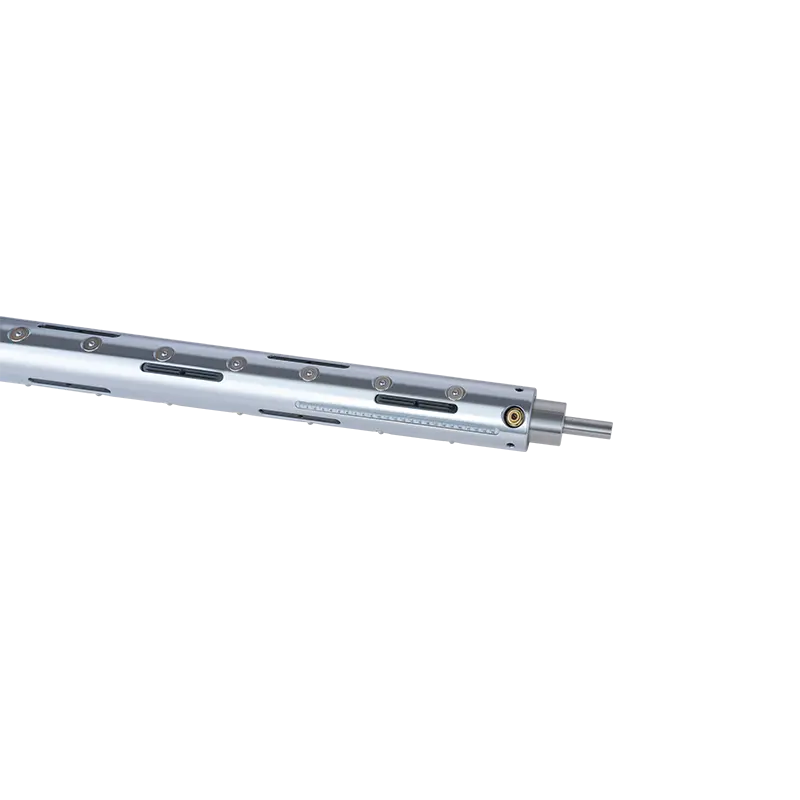
Why Does a Multi Bladder Air Shaft Matter for Roll Handling?
Every line that winds or unwinds material depends on the roll staying locked to the shaft while it spins. It doesn't matter whether the machine is laminating film, printing labels, or coating fabric — if the roll shifts even slightly during rotation, that shift shows up downstream as uneven winding, tension spikes, or material that has to be trimmed and scrapped.
A Multi Bladder Air Shaft sits right at that connection point between the machine and the roll. Once compressed air fills the internal chambers, the shaft expands and presses against the inner wall of the core, creating enough grip for the roll to rotate along with the shaft. When the job wraps up, releasing the air lets everything retract so the roll slides off without a fight.
None of this shows up as some dramatic feature on a spec sheet. It shows up in ordinary moments — an operator swapping a roll between shifts, a line running for hours without anyone needing to babysit it.
Without a shaft that grips reliably, a few problems tend to creep in:
- rolls shifting slightly during operation
- winding that comes out uneven
- operators making constant small adjustments
- roll changes that take longer than they should
- gaps in production that add up over a shift
A Multi Bladder Air Shaft is built specifically to keep these everyday annoyances from becoming routine.
What Actually Sets a Multi Bladder Air Shaft Apart?
Plenty of air shafts do roughly the same job on paper. Where they differ is what's happening inside.
Traditional shafts typically expand from a single point, which can create concentrated pressure in one specific area. A Multi Bladder Air Shaft spreads that same job across several independent chambers instead, so the expansion happens in multiple places around the shaft rather than all in one spot.
That spread matters more than it sounds like it would. Roll cores aren't perfectly identical from batch to batch — cardboard cores especially can vary slightly in thickness or roundness depending on the supplier and the run. A shaft that grips from several points at once tends to adapt to those small inconsistencies better than one relying on a single pressure point.
| Feature | Multi Bladder Air Shaft |
|---|---|
| Internal structure | Several separate air chambers |
| Grip distribution | Spread across multiple contact points |
| Roll engagement | Even and controlled |
| Roll release | Simple deflation |
| Daily handling | Roll mounting and removal without a fuss |
The point isn't to squeeze the core harder. It's to make contact more evenly, so rotation stays steady instead of wobbling around one overworked pressure point.
How Does the Shaft Actually Work Step by Step?
The internals sound complicated described on paper, but the actual sequence is pretty easy to picture.
Compressed air enters the shaft and travels through internal passages until it reaches each bladder. All of them start expanding at roughly the same time rather than one after another.
As they expand, they push outward on the gripping elements — usually small pads or bars along the shaft's surface. Those elements press against the inside of the roll core. Once contact builds up enough, friction locks the roll to the shaft, and whatever the machine does, the roll follows along with it.
Through the run, the shaft just holds that grip steady.
Once the job's done, releasing the air lets the bladders shrink back down, the gripping elements pull back in, and the roll slides right off without needing to be pried or forced.
| Stage | What Happens |
|---|---|
| Air goes in | Chambers fill with compressed air |
| Bladders expand | Gripping elements push outward |
| Roll runs | Shaft and roll spin together |
| Air releases | Roll comes off easily |
That's really the whole cycle, which is part of why this design shows up so often in plants doing roll changes several times a shift.
Why Bother With Multiple Bladders Instead of Just One?
No two production runs look exactly alike. Materials shift, cores vary slightly between suppliers, and conditions on the floor change from morning to afternoon depending on humidity or temperature.
Spreading air across several chambers lets pressure distribute across different sections of the core rather than concentrating in one spot. Each bladder does its share of the gripping, which adds up to a more even hold overall.
That setup brings a few practical upsides:
- it adapts more naturally to slight differences between roll cores
- it avoids putting all the pressure on one section of the core
- rotation stays smoother through the run
- the gripping surface ends up more uniform
None of this makes the shaft more complicated to operate. If anything, splitting the workload across multiple bladders makes the grip more forgiving day to day.
Where Does This Kind of Shaft Actually Show Up on the Floor?
Multi Bladder Air Shafts turn up across a wide range of industries that run material through as continuous rolls. The materials change — film, foil, paper, textile, laminate — but the underlying need stays the same: keep the roll turning in a controlled way as it moves through each stage.
You'll find these shafts in converting operations, flexible packaging lines, printing presses, laminating equipment, coating systems, textile mills, paper processing plants, and film converting setups.
In every one of these settings, someone is regularly pulling off a finished roll and mounting a fresh one, trying to keep the gap between the two as short as possible.
The machine around the shaft looks different depending on the industry, but the shaft's job stays the same — hold the roll steady enough that production can keep moving without constant babysitting. Plants that switch between several material types during the week tend to appreciate this kind of distributed grip even more, since it's less finicky about small variations from one roll to the next.
How Does This Kind of Shaft Support a Steadier Production Flow?
A lot of what keeps a line running well comes down to small things nobody talks about much. Roll handling is one of those quiet details that ripples through the rest of the process if it's not handled well.
A Multi Bladder Air Shaft helps by keeping a steady connection between the machine and the roll core through the whole run. The even pressure from multiple bladders keeps the roll from drifting out of position while it spins, and still lets it come off cleanly once the run wraps up.
That steadiness matters more in lines where material moves continuously, since even a small shift in roll position early on can turn into a bigger problem two or three stages downstream.
The payoff usually shows up in ordinary, unremarkable ways:
- roll changes go faster because nothing's fighting the operator
- fewer moments spent nudging alignment back into place
- material keeps moving at a steadier pace
- switching between rolls feels less like a disruption to the shift
A shaft like this isn't meant to be the star of the production line. It's more of a quiet supporting piece that keeps the rest of the process from stumbling over a detail that's easy to overlook until it goes wrong.
What's Worth Thinking About Before Choosing One?
Picking the right shaft comes down to understanding what a specific line actually needs, since priorities shift depending on the material and how often rolls get changed.
Material type plays into this. Some materials need gentler, more even handling because surface quality or alignment carries over into the next stage of production. Others are more forgiving.
How often rolls get swapped matters too. A line changing rolls several times a shift benefits from a shaft that engages and releases quickly. A line running longer, steadier cycles might care more about consistent operation and simple upkeep over time.
| Consideration | Why It's Worth Thinking About |
|---|---|
| Material type | Different materials call for different handling |
| Roll-changing habits | Frequent swaps favor quick, easy engagement |
| Machine compatibility | The shaft needs to fit naturally with existing equipment |
| Maintenance needs | Easy inspection keeps upkeep from becoming a chore |
| Working environment | Floor conditions can affect everyday performance |
The right shaft fits the actual rhythm of a specific line rather than checking boxes on a general spec sheet.
It's also worth thinking a bit further ahead. A plant that expects its material mix or product lines to shift over the next few years benefits from a shaft flexible enough to handle that shift without needing a full replacement.
How Does Regular Maintenance Keep One of These Running Well?
Like other mechanical equipment used in production environments, a Multi Bladder Air Shaft tends to stay reliable with regular care instead of being left unattended until a problem appears
Cleaning is the simplest habit to build in. Dust, fibers, and material residue tend to collect around the moving parts over time, and clearing that buildup regularly keeps things from interfering with smooth operation.
Regular visual checks help too. A quick look at the external components now and then can catch early signs of wear before they turn into a bigger issue mid-shift.
The air supply deserves attention as well, since the whole shaft depends on smooth inflation and deflation. If airflow gets inconsistent, grip and release start feeling less reliable.
| Maintenance Task | What It Does |
|---|---|
| Wiping down surfaces | Keeps buildup away from moving parts |
| Visual checks | Catches early warning signs |
| Checking the air system | Keeps inflation and release consistent |
| Handling with care | Protects both internal and external components |
None of this needs to turn into a complicated procedure. Just paying attention to the basics on a regular schedule tends to keep the equipment dependable through normal daily use.
Handling roll changes carefully matters here too. Avoiding rough handling or unnecessary impact during swaps goes a long way toward keeping the shaft's structure intact over its working life.
How Does This Kind of Equipment Fit Into More Flexible Manufacturing?
Manufacturing keeps shifting toward shorter runs, more frequent product changes, and materials that vary more than they used to. Equipment that can keep up with that kind of variability matters more than it once did.
A Multi Bladder Air Shaft fits that shift naturally because of how it's built. Splitting the gripping job across several chambers lets it respond more evenly when roll conditions vary from batch to batch, which suits plants that don't always run the exact same material twice in a row.
Operator convenience plays into this too. Equipment that's straightforward to use lets workers pick it up quickly and handle routine roll changes without needing constant guidance or a manual close at hand.
None of this makes a Multi Bladder Air Shaft the biggest piece of equipment on the floor. But small mechanical details like this tend to carry more weight in daily operations than their size would suggest, especially in plants running material through several stages back to back.
As material types and production schedules keep changing, equipment built around this kind of distributed grip tends to hold up well against those shifting demands.
The underlying idea stays pretty simple through all of this: create a steady connection between machine and roll, and make mounting or removing that roll as painless as possible for whoever's working the line that day.
Where Does This Kind of Shaft Fit Into the Future of Roll Handling?
Plants running continuous rolls keep looking for ways to trim down interruptions and keep workflow moving without constant babysitting. Equipment design in this space keeps drifting toward solutions that balance flexibility, easier day-to-day operation, and dependable performance shift after shift. A Multi Bladder Air Shaft fits that direction well, offering a way to handle roll cores that vary slightly without making the operating process any more complicated for whoever's running the line. Future refinements will probably keep chipping away at convenience, maintenance access, and how well the shaft plays with newer production setups as they come along. What keeps this kind of equipment relevant comes down to its everyday role rather than anything flashy — it connects machine to material, keeps rotation under control, and handles the practical side of continuous roll production without drawing attention to itself. In manufacturing settings, the difference between a smooth production shift and a difficult one often depends on small details like this. A stable connection between the roll and shaft helps maintain consistent operation, allowing each stage of the process to continue with fewer interruptions.
