


Ruian Chuangbo Machinery Co., Ltd. is specialized in manufacturing of machinery parts.
Production schedules do not always follow the same pattern. A paper converting plant might spend part of its shift processing one grade of paper before switching to another material. A flexible packaging manufacturer faces a similar situation when changing film specifications or roll sizes. In these working conditions, a Multi Bladder Air Shaft can make roll replacement less complicated by allowing operators to secure and release cores through pneumatic expansion. But is that enough for every application? Not necessarily. A Differential Air Shaft addresses a different problem, particularly when several narrow rolls need to be wound under different conditions.
Understanding how these shafts work in actual production is more useful than comparing product descriptions alone.
Why Can Frequent Material Changes Make Roll Handling More Complicated?
A roll change may look like a simple mechanical task, but operators know there is more to it. The finished roll has to come off the machine, the replacement core needs to fit properly, and the new material must remain stable during operation.
Things become less straightforward when production involves different materials. A paper roll and a plastic film roll may have completely different weights and core requirements. Operators cannot assume that the same setup will work without checking the shaft and core compatibility.
Mechanical clamping systems are still used in many facilities. They can be suitable for steady production where roll specifications do not change very often. However, repeated manual adjustments may slow down operations when several orders are processed within a short period.
There is also the question of operator workload. When roll replacement becomes a regular task, a simpler gripping and release process can make daily production easier to manage.
How Does a Multi Bladder Air Shaft Handle Roll Replacement?
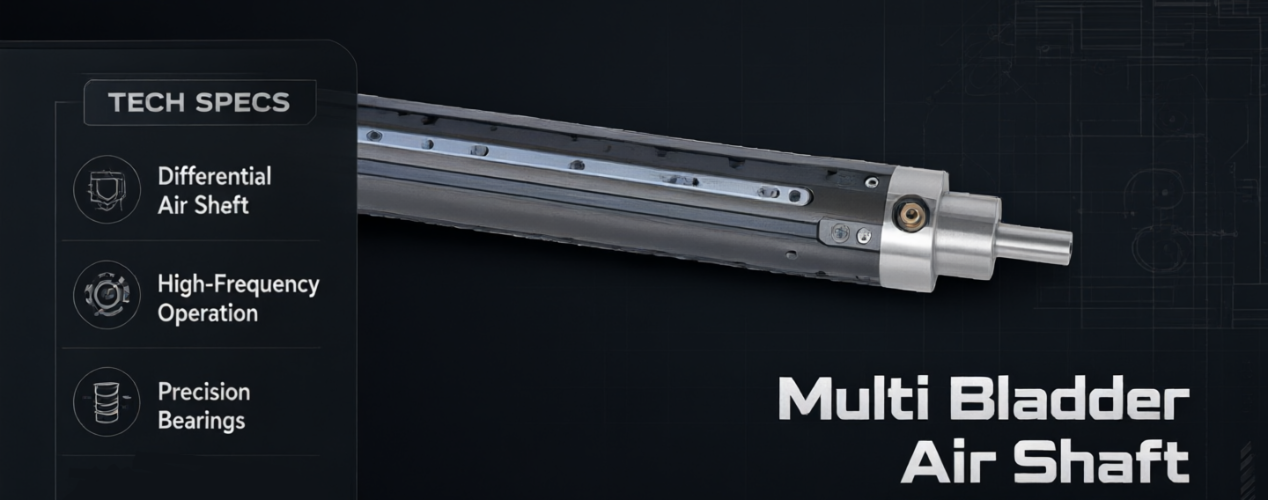
The construction of a Multi Bladder Air Shaft is based on pneumatic expansion. Multiple bladders sit inside the shaft body and activate the gripping elements when compressed air enters the system.
As the bladders expand, the gripping elements move outward and press against the inner wall of the roll core. The resulting contact holds the core in position during winding or unwinding. Once the air is released, the bladders contract, allowing the gripping elements to move back and making core removal easier.
The process is straightforward, which is part of its appeal in production environments where rolls are changed regularly.
Why Does the Practical Difference Become Clear During Repeated Operations?
Think about a film converting line that handles several customer orders with different roll specifications. Every change requires the operator to remove the previous core and prepare the next one.
With a pneumatic shaft, the gripping and release process does not depend on manually tightening individual locking components. The operator can use the air supply to activate the internal mechanism.
That does not mean every changeover becomes automatic. Material loading, alignment, machine adjustments, and safety checks still need attention. The shaft simply makes one part of the process easier to handle.
Why Should Bladder Condition Not Be Overlooked?
The internal bladders are exposed to repeated expansion and contraction. Over time, wear or leakage may affect how the gripping elements respond to air pressure.
For this reason, maintenance access matters just as much as the initial product design. Some shaft constructions allow worn bladder components to be replaced without changing the complete assembly. Manufacturers should confirm the actual servicing procedure before choosing a model.
Can One Shaft Work with Paper, Film, and Other Materials?
A Multi Bladder Air Shaft can be configured for different converting applications, but material variety does not automatically mean universal compatibility.
Paper, plastic film, aluminum foil, and nonwoven fabrics behave differently during processing. Their weights, core strength, and winding requirements all affect the type of support needed.
| Material | Typical Application | Selection Consideration |
|---|---|---|
| Paper | Printing and paper converting | Core strength and roll weight |
| Plastic film | Flexible packaging | Core fit and winding tension |
| Aluminum foil | Industrial conversion | Roll weight and gripping stability |
| Nonwoven fabric | Hygiene and filtration | Roll width and material support |
| Flexible packaging | Film processing | Core dimensions and machine speed |
Why Does a Suitable Core Fit Make a Difference?
The core inner diameter needs to match the shaft specifications. If the fit is incorrect, the expanding elements may not make proper contact with the core surface.
This can become a problem when a manufacturer switches between materials that use different core sizes. Even if the shaft can accommodate different applications, its configuration still needs to be checked.
Roll weight is another point worth discussing. A shaft designed for lightweight film rolls may require a different structural arrangement for heavier paper or foil applications.
How Do Material Changes Affect Machine Settings?
There is another detail that sometimes gets overlooked. Replacing a roll does not mean the entire production setup is ready to run.
Film thickness, material tension, web alignment, and winding conditions may all need adjustment. The Multi Bladder Air Shaft handles core gripping, but it does not automatically control these other machine functions.
Operators should check the core position and gripping condition whenever a new roll is installed. It is a simple step, yet it can prevent unnecessary adjustments once the machine starts running.
Multi Bladder Air Shaft or Differential Air Shaft: Which One Fits the Process?
These two products are sometimes discussed together because both are used in roll processing machinery. Their purposes, however, are not the same.
A Multi Bladder Air Shaft focuses on holding and releasing roll cores. A Differential Air Shaft deals with differences in winding conditions when several rolls share the same shaft.
That distinction becomes clearer in a slitting and rewinding operation.
How Does a Multi Bladder Air Shaft Focus on Core Gripping?
Its pneumatic mechanism expands against the core to hold the roll in place. When the air is released, the core can be removed.
For production lines that handle frequent roll replacement, this arrangement can reduce manual clamping work. Its suitability depends on the core dimensions, roll weight, required gripping force, and shaft construction.
It is not designed to independently adjust the winding behavior of multiple narrow rolls.
How Does a Differential Air Shaft Handle Different Winding Requirements?
A Differential Air Shaft is commonly found in slitting and rewinding machinery.
During slitting, a wide parent roll is divided into narrower strips. These strips are then wound into separate finished rolls. The challenge is that individual strips may not have identical thickness, diameter, or winding tension.
If all positions are forced to rotate under identical conditions, some rolls may become too tight while others remain loose.
A differential mechanism allows individual roll positions to accommodate these differences through controlled friction or slip. This is particularly useful when several narrow rolls are processed together and their winding conditions are not exactly the same.
What Are Their Operating Differences at a Glance?
| Feature | Multi Bladder Air Shaft | Differential Air Shaft |
|---|---|---|
| Main function | Core gripping and release | Accommodating winding differences |
| Working principle | Pneumatic bladder expansion | Differential friction or slip |
| Common application | Roll handling and changeovers | Slitting and rewinding |
| Main concern | Core fit and gripping stability | Individual roll movement |
| Maintenance | Bladders and gripping parts | Friction and adjustment parts |
A manufacturer changing roll cores throughout the working day may have little need for differential winding functions. On the other hand, a slitting facility producing several narrow rolls may find that independent roll movement is more relevant than quick core release.
The equipment should follow the production process, not the other way around.
What Can Affect the Performance of a Multi Bladder Air Shaft?
Even a suitable shaft can develop problems when its operating conditions are not properly matched.
Core dimensions are worth checking carefully. The shaft length, core inner diameter, and roll weight all influence whether the equipment can provide the required support. Incorrect sizing may affect gripping contact and create unnecessary movement during operation.
Air supply is another consideration. The pneumatic system needs stable pressure to expand and release the bladders correctly. Leakage, worn seals, or damaged internal components can interfere with this process.
Operators should inspect the air connection and bladder condition during routine maintenance. Increasing pressure to compensate for a poor core fit is not a proper solution. The actual cause needs to be identified.
Machine installation also deserves attention. Mounting dimensions, drive connections, bearing positions, and available space must match the existing equipment.
For Differential Air Shaft applications, the inspection process is different. Friction components, adjustment mechanisms, and the movement of individual roll positions require attention because they directly affect winding behavior.
What Information Should You Prepare When Choosing a Shaft?
Before contacting a manufacturer, it helps to prepare some information about the production line. A general request for an air shaft may not provide enough detail to identify a suitable configuration.
| Information | Why Manufacturers Need It |
|---|---|
| Material type | Identifies the application conditions |
| Core inner diameter | Confirms gripping compatibility |
| Core length | Determines shaft dimensions |
| Maximum roll weight | Helps establish structural requirements |
| Operating speed | Influences mechanical design |
| Winding requirements | Helps identify the appropriate shaft type |
| Machine mounting details | Confirms installation compatibility |
Maintenance arrangements should also be discussed. For a Multi Bladder Air Shaft, ask how the bladders are inspected and replaced. For a Differential Air Shaft, check how the friction mechanism is adjusted and serviced.
One practical point is worth discussing during equipment selection: what happens when the production specification changes? A manufacturer should understand not only the current material but also the different core sizes and operating conditions the machine is expected to handle.
Providing these details makes it easier to determine whether pneumatic core gripping, differential winding control, or a combination of different shaft configurations is required.
