


Ruian Chuangbo Machinery Co., Ltd. is specialized in manufacturing of machinery parts.
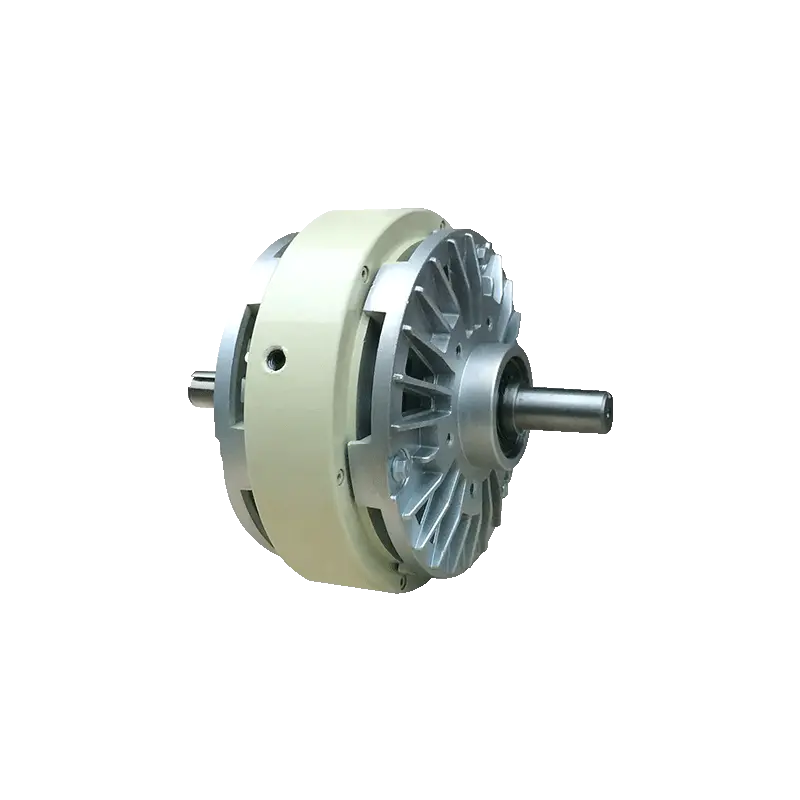
Switching materials on a winding or unwinding line should be a parameter change, not a troubleshooting exercise. But in practice, changing from a heavy paper substrate to a thin film — or from a rigid foil to a stretch-sensitive textile — often means the previous torque setting either tears the material or leaves it so loose the roll won't form properly. Working with a qualified Magnetic Powder Brake Manufacturer helps clarify the adjustment logic, but the underlying principle is consistent: torque output needs to be matched to the specific tension tolerance of the material in use, not left at a fixed setting carried over from the previous job. A Magnetic Powder Brake gives operators the ability to make that match precisely, because the output torque responds directly and proportionally to the excitation current.
Why Torque Tuning Matters More Than a Fixed Setting
Different Materials Have Different Tension Windows
Every web material has a usable tension range — a band between the point where it goes slack and the point where it begins to stretch, deform, or break. That range varies significantly by material type, thickness, and surface treatment.
A film that handles comfortably at a certain tension level may begin to neck or stretch if the brake holds even slightly more torque than the material can absorb. The same torque that works correctly for a coated paper will overdrive a thin polypropylene film. The reverse is equally problematic: too little torque allows the web to go slack, causing tracking problems, poor winding geometry, and registration errors on printing lines.
Fixed Torque Settings Cannot Adapt to Roll Diameter Change
Even within a single material, the required braking torque changes as the roll unwinds. As the roll diameter decreases, the same braking torque produces a higher line tension — because the same resistive force acts on a shorter moment arm. A torque level that was correct at the start of the roll becomes excessive as the roll approaches its core.
This is why fixed torque settings produce tension drift across a run, and why tunable torque output is a functional requirement for consistent web control.
How a Magnetic Powder Brake Generates and Adjusts Torque
The Powder-Based Torque Mechanism
Inside the brake, a rotor and housing are separated by a gap filled with fine ferromagnetic powder. When excitation current flows through the coil, the resulting magnetic field causes the powder particles to link together into chains bridging the rotor and housing. These chains create braking resistance proportional to the magnetic field strength.
Increasing the current strengthens the field, increases chain formation, and raises the braking torque. Reducing the current weakens the field, loosens the chains, and lowers the torque. The relationship between current and torque is approximately linear within the operating range, which means torque can be adjusted smoothly and predictably rather than in steps.
Is the Response Fast Enough for Material Switching?
The electrical response of the brake is fast — changes to the excitation current produce corresponding changes in torque within milliseconds. The practical speed of material-to-material switching depends on how quickly the operator or control system can establish and verify the new current setting.
For manual adjustments on a slower line, the response is more than adequate. For automated systems switching between material runs without stopping, the brake's fast electrical response supports seamless transitions when the controller is programmed with the target current for each material profile.
The Tuning Approach: Matching Torque to Material
Start from the Material's Tension Requirement, Not the Brake Setting
The tuning sequence begins with the material, not the equipment. Before adjusting the brake, establish:
- The tension range the material can tolerate without stretching or going slack
- The roll diameter at the start and end of the run (this determines how much torque adjustment will be needed across the run)
- Whether the line runs at constant speed or variable speed (speed changes affect the tension dynamics)
- Whether the system uses open-loop or closed-loop tension control
With these inputs, the target torque range can be calculated and the brake adjusted to deliver it.
Adjusting Excitation Current to Set the Torque Level
With the brake connected to a controller, the adjustment process follows this sequence:
- Set the controller output to a low starting current and allow the line to run at low speed
- Observe the web behavior — slack indicates too little torque, tension or edge waviness indicates too much
- Increase or decrease the current in small increments and allow the web to stabilize after each change
- When the web runs flat, tracks correctly, and the roll builds evenly, note the current setting
- If the line will run at variable speed, test the torque behavior across the speed range and adjust the current profile accordingly
Document the final current setting as the material's baseline parameter. This baseline becomes the reference for future runs on the same material without requiring a full setup each time.
Accounting for Roll Diameter Change During the Run
For materials running on a long unwinding cycle, a fixed current setting will not maintain constant line tension across the full diameter range. The options for managing this are:
- Diameter-compensated control: A controller that receives a diameter signal — either measured directly or calculated from line speed and accumulated length — adjusts the brake current as the roll unwinds to maintain constant tension
- Dancer arm feedback: A spring-loaded or pneumatic dancer arm tracks web tension and sends a position signal to the controller, which adjusts the brake current to keep the dancer at its set point
- Load cell feedback: A load cell on a fixed roller measures actual web tension and feeds the signal back to the controller for closed-loop correction
Each of these approaches keeps the brake operating in response to real-time tension data rather than a fixed current setting, which is the correct configuration for materials where tension consistency matters.
Torque Tuning by Material Category
Different material categories have different tuning characteristics. The table below provides a practical starting framework — actual settings will vary by line configuration and specific material properties.
| Material Category | Tension Sensitivity | Torque Adjustment Priority | Common Control Mode |
|---|---|---|---|
| Thin plastic film (BOPP, PET) | High — stretches easily | Keep torque low; use closed-loop | Load cell or dancer feedback |
| Flexible packaging laminates | Moderate | Balance layer integrity with web control | Dancer arm feedback |
| Coated and uncoated paper | Moderate to low | Broader torque window | Open or closed-loop |
| Metallic foil | High — prone to crease | Consistent, smooth torque critical | Closed-loop with load cell |
| Woven and nonwoven textiles | Variable by weave | Test each material grade separately | Dancer arm feedback |
| Heavy board and paperboard | Low sensitivity | Higher torque range needed | Open-loop or basic closed-loop |
General tuning direction is reflected. Any new material or notable change in material specification requires a new baseline setup, not an adjustment from the prior setting.
Managing Specific Problems During Torque Tuning
Web Stretching or Necking
If the web is narrowing (necking) or showing surface strain patterns, the braking torque is above the material's elastic limit. Reduce the current in increments until the strain pattern disappears. For film materials, this can be a narrow adjustment window — small changes in current produce meaningful changes in tension.
Check that the torque reduction is consistent across the full web width. Uneven torque across the shaft can cause differential tension from side to side, which produces edge stretch while the center remains acceptable.
Slack Web and Tracking Problems
A web that goes slack is not receiving enough braking resistance. The roll may not wind evenly, the web may wander on the rollers, and on printing lines, registration will be affected.
Before increasing the current, verify that the problem is torque-related rather than line speed-related. A sudden change in line speed can produce transient slack without any change in the brake setting. If the slack is consistent rather than transient, increase the current in controlled increments and observe the web behavior.
Tension Build-Up Toward the Core
If tension increases as the roll approaches the core, the torque is not being reduced to compensate for the decreasing roll diameter. This is a control mode issue rather than a brake hardware issue — the brake is holding the current set at the start of the run, and the reducing diameter is translating that fixed torque into progressively higher line tension.
The solution is diameter compensation, either through a calculated diameter input to the controller or through dancer arm or load cell feedback that directly measures the resulting tension.
Overheating During Extended Runs
Brake temperature rises with sustained operation, particularly at higher torque levels. As operating temperature increases, the behavior of the magnetic powder changes, which shifts the torque-current relationship. A current setting that produced the correct torque at the start of the run may produce a different torque level once the brake reaches its thermal equilibrium.
Practical responses to overheating:
- Verify that airflow around the brake housing is not obstructed
- Check that the brake's rated duty cycle matches the actual operating pattern
- For high-duty-cycle applications with sustained torque demands, consider a water-cooled configuration
- Monitor housing temperature during extended production runs and build in cool-down intervals if needed
Integrating Torque Tuning into a Production Changeover Process
When switching between materials on a production line, a structured changeover process reduces setup time and avoids material waste:
- Record the current setting for the outgoing material before stopping the run
- Clear the web path and install the new material roll
- Start at a conservatively low current setting for the new material
- Run the line at reduced speed while observing web behavior
- Adjust the current incrementally until the web runs correctly
- Increase line speed to production rate and verify that the tension remains stable
- Record the new current setting in the material parameter log
A material parameter log — a record of the baseline current setting, roll diameter at setup, line speed, and any controller offsets — builds a reference that makes subsequent runs on the same material significantly faster to set up.
Sourcing and Technical Support for Brake Configuration
Torque tuning is part of the commissioning and operations process, but getting the brake specification right before installation is equally important. A brake that is undersized for the required torque range will be operating near its limit, which limits the available adjustment range and accelerates thermal wear. A brake that is significantly oversized will have reduced resolution in the lower portion of its current range, making fine adjustments harder. Ruian Chuangbo Machinery Co., Ltd. manufactures Magnetic Powder Brakes and related tension control components for printing, packaging, film converting, and winding applications. Their engineering team can review the torque requirements, roll geometry, line speed range, and control system configuration of a specific application and recommend a brake specification suited to the operating conditions. If you are setting up a new line, switching to a wider range of materials, or troubleshooting tension inconsistency on an existing installation, reaching out with those application details gives their team the context to provide a useful technical recommendation.
