


Ruian Chuangbo Machinery Co., Ltd. is specialized in manufacturing of machinery parts.
Uneven tension in a slitting line does not announce itself loudly. It shows up in the finished roll — a telescoping edge here, a wrinkled layer there, a slit width that drifts slightly across a production run. By the time the defect is visible, the material has already passed through the process, and the cost is sitting in scrap or rework. Engineers who manage film, paper, foil, or flexible packaging production know this problem well. The core of the solution is often not in the slitting blades or the drive system, but in how the roll itself is held during the process. A Pneumatic Air Shaft changes the gripping equation entirely — replacing mechanical clamping with uniform pneumatic expansion that distributes holding force evenly across the full width of the core, which is where uneven tension problems typically originate.
Why Uneven Tension Happens in Slitting Operations
The Root Causes Before the Fix
Tension in a slitting line is not a single value — it is a distribution across the width of the web being slit. When that distribution is uneven, different lanes of the slit web experience different degrees of stretch, and the resulting rolls wind at different densities with different edge profiles.
Several factors drive uneven tension, and they interact:
Core gripping inconsistency. When the shaft holding the core does not grip uniformly along its length, the core can shift slightly during operation. Even a small positional change at the core translates into tension variation across the web width.
Roll imbalance during acceleration and deceleration. A core that is not concentric with the shaft introduces dynamic imbalance that creates cyclic tension variation at line speed. The faster the line runs, the more pronounced this effect becomes.
Material slippage between core and shaft. If the shaft does not hold the core with sufficient and consistent friction force, the core may slip during torque transmission — particularly at startup and during speed changes. Slippage produces tension spikes followed by drops that affect the wound roll structure.
Differential winding density across the roll width. If some zones of the roll are wound tighter than others, the tension in those zones builds faster as diameter increases, creating a feedback loop that amplifies initial variations.
Each of these problems traces back, at least in part, to how the shaft holds the core. That is where pneumatic shaft technology intervenes.
How a Pneumatic Air Shaft Actually Works
The Expansion Mechanism in Detail
A Pneumatic Air Shaft uses compressed air to expand a set of bladders — flexible, pressurized chambers built into the shaft body — outward against the inner surface of the paper or plastic core. When the bladder inflates, the contact area between the shaft and the core increases dramatically, and the gripping force distributes across that contact area rather than concentrating at discrete mechanical contact points.
The sequence in operation is straightforward:
- The core is loaded onto the deflated shaft
- Compressed air is introduced through the shaft's air inlet valve
- The bladder expands radially outward, pressing uniformly against the core inner surface
- The gripping force holds the core concentrically on the shaft without localized pressure points
- When the roll is complete, air is released, the bladder contracts, and the core can be removed freely
The key word in step three is "uniformly." Unlike mechanical expansion systems that use keys or bars that contact the core at a limited number of discrete points, the inflated bladder contacts the core continuously around its circumference. That contact continuity is what distributes force evenly and eliminates the differential gripping that causes tension variation.
What Is a Multi Bladder Air Shaft and When Does It Matter?
Why Bladder Count Affects Long Web Width Applications
A standard Pneumatic Air Shaft uses a single bladder running along the shaft length. This works well for narrow to moderate web widths. As the working width increases, however, the single-bladder design faces a structural limitation: pressure in a long, flexible chamber is uniform along its length, but the contact force distribution at the core depends on the bladder maintaining consistent geometry across the full shaft length. Minor shaft deflection or core bore variation can produce contact inconsistency at the ends versus the center.
A Multi Bladder Air Shaft addresses this by dividing the expansion function across several independently inflatable chambers positioned along the shaft length. Each bladder section can be pressurized to a consistent level, and the segmented contact zones accommodate minor geometric variation in the core without losing grip uniformity.
The practical benefits for wide-width slitting lines:
- More consistent gripping force distribution from end to end of a wide roll
- Reduced sensitivity to core bore dimensional variation across the width
- Better concentric holding under the lateral forces that wide webs generate
- More controlled release across the full width when the roll is complete
For packaging film, wide-format paper, and nonwoven slitting operations where roll widths exceed moderate dimensions, the multi bladder configuration is worth specifying rather than assuming a single-bladder design will perform adequately.
Air Shaft Parts: Understanding the Components That Affect Performance
What Each Part Does and Why Its Condition Matters
A pneumatic shaft is not a single component — it is an assembly of parts that interact to produce the gripping function. Understanding what each part does clarifies which elements require attention in maintenance and which failures produce the tension problems operators observe.
Shaft body. The structural core of the assembly, typically machined from steel or aluminum alloy. Its straightness and surface finish affect both balance at speed and the quality of bladder contact geometry. A bent or worn shaft body causes runout that translates directly into cyclic tension variation.
Air Shaft Bladder Tubing. The flexible element that inflates against the core. Air Shaft Bladder Tubing is typically made from rubber or a reinforced elastomeric compound that can withstand repeated inflation cycles and the radial stress of core contact. Bladder condition is a common source of shaft performance degradation — wear, cracking, or hardening of the tubing reduces contact consistency and can cause localized grip failure. Inspecting bladder condition is a routine maintenance task that prevents tension problems before they appear in the finished roll.
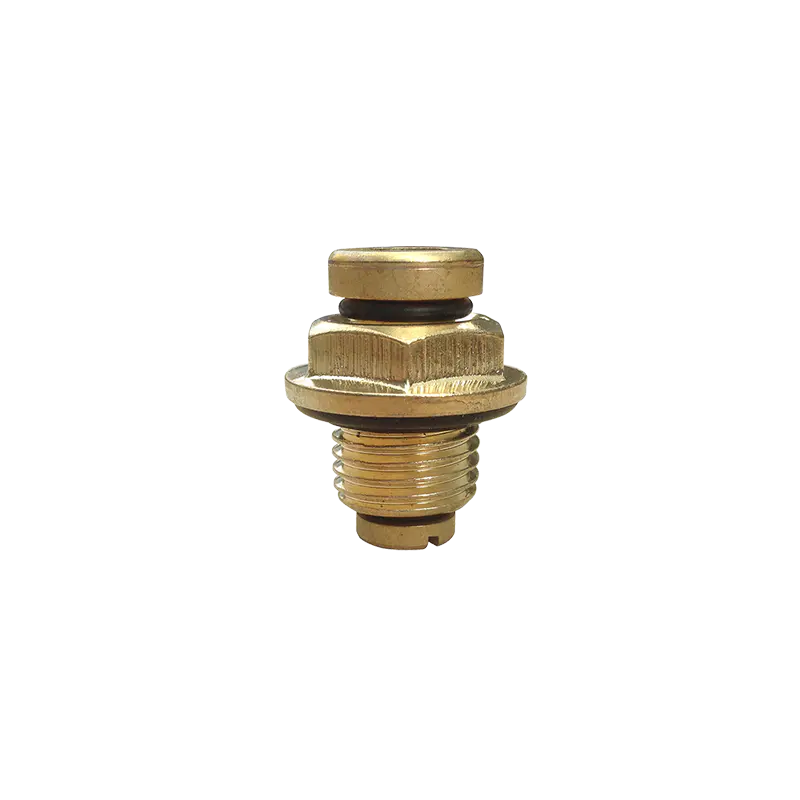
Air valve. The inlet through which compressed air enters the shaft. Valve condition affects how quickly the shaft inflates and deflates, and a leaking valve allows air to escape during operation, reducing grip force gradually over the production run. Pressure loss mid-run is a source of tension drift that is easy to miss if the system is not monitored.
Locking rings and end caps. Structural elements that locate the shaft in the machine and contain the bladder assembly. Wear at these interfaces affects shaft runout and the consistency of core positioning.
Keys or lugs (in key-type expansion designs). Some pneumatic shafts combine bladder expansion with physical keys that project outward when the bladder inflates, engaging slots in the core. These designs provide positive mechanical engagement for high-torque applications but introduce discrete contact points that affect gripping uniformity differently from pure bladder contact designs.
How Air Shaft Design Affects High-Speed Slitting Performance
Dynamic Balance and Tension Stability at Line Speed
Slitting lines run at speeds that make the dynamic behavior of rotating components as important as their static properties. A shaft that holds a core well at low speed may introduce tension variation at production speed if its balance characteristics are inadequate.
Dynamic imbalance in a rotating shaft assembly produces a centrifugal force that varies with the square of rotational speed. At low speed, the resulting vibration is negligible. At high speed, the same imbalance produces vibration amplitude that transmits through the bearing housings into the machine frame and, critically, into the web tension. The result is a cyclic tension variation at the frequency of the shaft rotation that leaves a visible pattern in the wound roll.
Pneumatic Air Shafts used in high-speed applications are balanced to limits appropriate for the operating speed. The balance specification of a shaft depends on its weight, diameter, and the speed at which it will operate. Specifying shaft balance according to the actual line speed — rather than accepting a generic standard — is an investment that pays back in roll quality.
Core concentricity is the other dynamic factor. When the shaft holds the core concentrically — with the core bore centered on the shaft axis — the roll builds symmetrically and its dynamic balance improves as diameter increases. When the core runs eccentrically, the growing roll amplifies the imbalance and tension variation worsens through the winding cycle.
Unwind vs. Rewind: Different Tension Control Demands
Why the Same Shaft Technology Is Used Differently at Each End
The tension requirements at the unwind and rewind ends of a slitting line are related but distinct, and the role of the pneumatic shaft at each position needs to reflect that difference.
At the unwind station, the shaft holds a parent roll that decreases in diameter as material feeds out. The shaft must maintain consistent core grip as the roll lightens and the rotational inertia decreases. A shaft with poor grip allows the core to slip during braking events — when the line decelerates or stops — and the resulting slack in the unwind produces tension spikes when the line restarts.
At the rewind stations, each shaft holds a growing roll that increases in diameter and weight as winding proceeds. The shaft must transmit the winding torque to the core without slippage, and it must maintain concentric holding as the roll grows and its center of gravity moves outward from the shaft axis. In differential winding systems — where each rewind position runs at a slightly different tension to produce consistent roll density despite varying slit widths — the shaft's grip consistency becomes a precision requirement rather than a general one.
Specifying different shaft configurations for unwind and rewind based on their functional demands — rather than using the same specification at both positions by default — improves the tension control system as a whole.
Comparing Pneumatic and Mechanical Shaft Systems
| Factor | Pneumatic Air Shaft | Mechanical Expansion Shaft |
|---|---|---|
| Core contact type | Continuous bladder surface | Discrete mechanical elements |
| Gripping force distribution | Uniform across contact area | Concentrated at contact points |
| Core surface damage risk | Low | Higher with worn elements |
| Speed of core loading/unloading | Fast (air release) | Slower (manual disengagement) |
| High-torque capability | Good — pressure adjustable | Good — positive mechanical lock |
| Sensitivity to core bore variation | Low | Moderate |
| Maintenance focus | Bladder and valve condition | Mechanical element wear |
| Suitability for high-speed lines | Strong with proper balancing | Depends on design |
| Adjustability for different core IDs | Limited to designed range | Some designs accommodate range |
The comparison reflects that pneumatic shafts suit applications where gripping uniformity and fast core change are priorities. Mechanical systems suit very high torque applications where positive engagement is more important than distribution uniformity. Many slitting line configurations use pneumatic shafts as the standard and reserve mechanical designs for specific high-torque or large-core applications.
Air Shaft Bladder Tubing: The Wear Component That Drives Maintenance Schedules
Why Bladder Condition Is the Variable That Changes Over Time
Among the Air Shaft Parts in a pneumatic shaft assembly, the bladder tubing has a shorter service life than other parts and a direct effect on performance. Every inflation and deflation cycle stresses the elastomeric material. Repeated core contact during winding imposes radial compression. Heat from the operating environment and from the material being processed accelerates aging of the rubber compound.
Signs that bladder replacement is approaching:
- Reduced grip force at the same inflation pressure (bladder has stretched or hardened)
- Visible cracking or surface checking on the bladder surface
- Air leakage during operation indicating a micro-tear in the bladder
- Inconsistent grip across the shaft length suggesting partial bladder failure
Proactive bladder replacement before failure produces predictable maintenance schedules. Waiting for in-service bladder failure produces unplanned downtime and, if the failure occurs during winding, a roll that may need to be scrapped because the tension profile was compromised mid-run.
Sourcing replacement Air Shaft Bladder Tubing from a supplier who understands the shaft design and the operating conditions — rather than substituting generic rubber tubing — maintains the material and dimensional specifications that the original design requires.
Choosing a Supplier With Real Application Experience
Pneumatic shaft selection, configuration, and maintenance are areas where application experience makes a measurable difference in outcomes. A shaft sized for the wrong core diameter range, specified without attention to balance requirements, or maintained with non-original bladder materials will perform below what the technology is capable of delivering. Ruian Chuangbo Machinery Co., Ltd. manufactures Pneumatic Air Shafts and related components for slitting, winding, and web handling applications across packaging, printing, film, and paper processing industries. Their product range includes standard and multi bladder configurations, along with Air Shaft Parts and replacement bladder assemblies suited to a range of shaft designs and operating conditions. If you are experiencing tension control problems on a slitting line, evaluating shaft upgrades, or sourcing replacement components for an existing China Air Shaft installation, reaching out to discuss your application parameters and current shaft configuration is a practical way to identify whether a change in shaft specification or component quality will address the tension variation you are seeing in production.
