


Ruian Chuangbo Machinery Co., Ltd. is specialized in manufacturing of machinery parts.
Production lines running film, paper, labels, or packaging materials share a common pressure point: roll changes. Every time a finished roll needs to come off and an empty core goes on, the clock is running. Tension drifts. Cores slip. Alignment shifts slightly and the next roll builds unevenly. These are not catastrophic failures — they are the kind of incremental inefficiencies that quietly erode throughput across an entire shift. For engineers and equipment buyers evaluating where winding performance breaks down, the answer often traces back to Air Shaft Parts — specifically, how well the individual components within a pneumatic shaft system are doing their job under real production conditions.
What Does a Pneumatic Air Shaft Actually Do?
At its core, a Pneumatic Air Shaft is a mechanical component that holds a paper or plastic core during winding or unwinding operations. When compressed air is introduced into the shaft body, internal components expand outward to grip the core from the inside. When air is released, the shaft contracts and the finished roll can be removed.
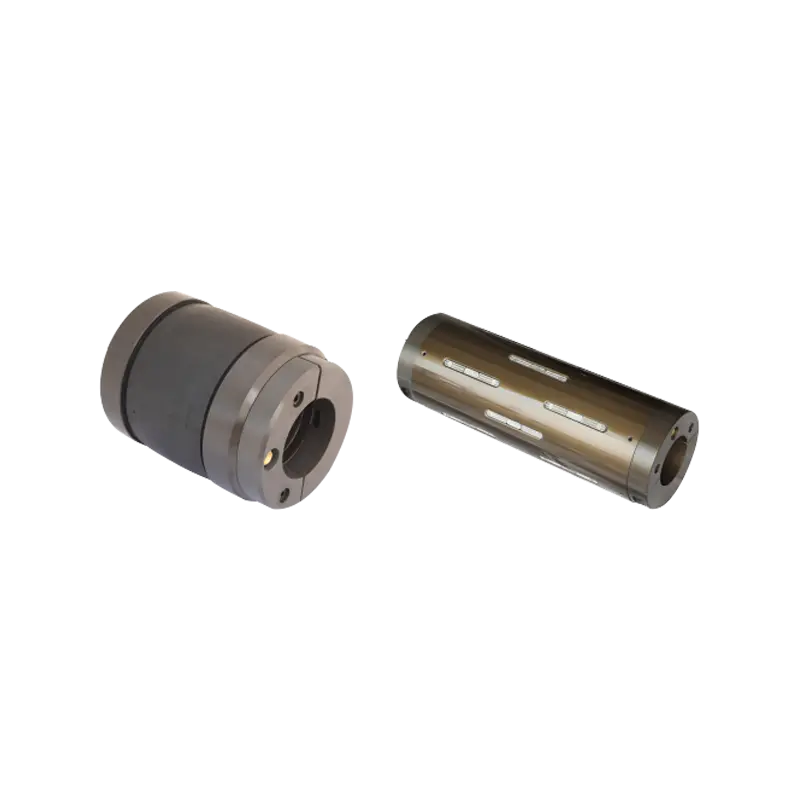
The principle sounds straightforward. In practice, how reliably and precisely that expansion and contraction happens — and how uniformly the gripping force distributes across the core — determines whether the winding process runs smoothly or generates problems.
A Pneumatic Air Shaft functions through several coordinated parts:
- The shaft body, which provides structural support and houses the internal components
- The bladder or expansion element, which inflates to drive the gripping mechanism outward
- The gripping elements themselves — lugs, leaves, or keys depending on the shaft design
- Valve fittings that control air intake and release
- End plugs and bearing journals that interface with the machine frame
Each of these components contributes to how the shaft performs. A worn bladder delivers uneven inflation. A damaged lug transfers torque inconsistently. A sticky valve slows changeover time. The shaft as a system is only as reliable as the parts working within it.
How Do Individual Parts Affect Winding Quality?
Winding quality is not a single variable — it is the combined result of gripping stability, tension consistency, rotational balance, and roll alignment. Air shaft components influence all four, sometimes in ways that are not immediately obvious.
Gripping stability depends on whether the expansion elements make consistent contact with the core interior. If lugs or leaves deploy unevenly — because the bladder has developed a soft spot or the expansion mechanism is worn — the core grips tighter on one side than the other. The roll builds with uneven tension distribution, which shows up as telescoping, bagging, or edge misalignment in the finished product.
Tension consistency is related but distinct. Even when the core is held securely, tension fluctuations during winding create variation in how tightly material winds at different points across the roll. Shaft components that respond sluggishly to speed changes — particularly heavy or imbalanced shafts — introduce tension spikes that affect the outer layers of the roll. Lightweight Air Shaft designs address this directly by reducing rotational inertia, which allows the shaft to accelerate and decelerate more responsively with the line speed.
Roll alignment indicates whether the core sits perpendicular to the machine axis. End plugs and bearing journals carry this responsibility.When these components wear, the shaft runs slightly off-center, and the roll builds with a progressive taper or wander that accumulates across the entire wind.
Why Does Shaft Design Vary Across Applications?
Not every winding application imposes the same demands, and that variability is precisely why different air shaft configurations exist. The wrong shaft design for a given application does not fail dramatically — it just underperforms, introducing small inefficiencies that add up over production runs.
Lug Type Air Shaft designs extend hardened steel lugs radially outward when inflated. The lugs engage directly with slots or notches in the core. This mechanical interlock transfers torque with very little slippage, which makes the lug type well-suited to heavy-duty winding where high tension loads are involved. Cardboard tube cores used in heavy paper or textile winding are typical applications. The trade-off is that the core needs to be compatible with the lug pattern — standard slotted cores are required.
Leaf Type Air Shaft designs use thin metal strips that expand outward across the shaft surface when the bladder inflates. The contact area is distributed along the entire length of the leaf rather than concentrated at discrete lug points, which produces a gentler, more uniform grip. Film, tissue, and lightweight paper applications benefit from this because the core material is more fragile and the distributed pressure avoids localized stress that could deform or crack the core during winding.
Multi Bladder Air Shaft designs incorporate more than one independent inflation chamber along the shaft length. Each section inflates separately, allowing the gripping force to be adjusted or isolated across different zones of the shaft. This is particularly useful in wide-web applications where slight variations in core diameter or machine alignment across the web width would cause uneven gripping with a single-bladder design. The multi-bladder approach compensates for those variations and maintains consistent contact pressure across the full shaft length.
Lightweight Air Shaft construction uses aluminum alloy or composite materials rather than steel for the shaft body. The reduction in rotating mass lowers the moment of inertia, which translates to more responsive acceleration, reduced load on the drive system, and lower energy consumption over time. High-speed converting lines — where shafts cycle through acceleration and deceleration repeatedly — see benefit from this design approach.
Comparing Air Shaft Types Across Key Performance Factors
Selecting a shaft type involves weighing several factors against the specific demands of the application. The comparison below reflects how different designs perform across the variables that matter in production:
| Factor | Lug Type | Leaf Type | Multi Bladder | Lightweight |
|---|---|---|---|---|
| Core gripping method | Mechanical lug-to-slot interlock | Distributed leaf contact | Multi-zone bladder expansion | Varies by design |
| Torque transfer capacity | High — mechanical interlock | Moderate — friction-based | High — distributed pressure | Depends on base design |
| Core compatibility | Slotted cores required | Standard smooth cores | Standard and irregular cores | Standard cores |
| Grip uniformity | Good at interlock points | High across full surface | High across zones | Standard |
| Suitability for fragile cores | Limited | Well-suited | Well-suited | Depends |
| High-speed performance | Adequate | Good | Good | Strong |
| Rotational inertia | Higher (steel construction) | Moderate | Higher | Low |
| Typical application | Heavy paper, textile, rigid materials | Film, tissue, flexible web | Wide-web, variable core sizes | High-speed converting |
| Changeover speed | Standard | Standard | Standard | Faster due to lower weight |
Reading across the comparison, no single design covers every situation with equal effectiveness. Application requirements — core type, web width, line speed, material sensitivity — determine which configuration delivers consistent winding performance.
What Happens When Air Shaft Parts Degrade?
Degradation in air shaft components rarely announces itself with a sudden failure. It tends to accumulate gradually, showing up initially as slight inconsistencies in winding quality before eventually producing more visible problems.
Bladder wear is a common degradation path. The bladder experiences repeated inflation and deflation cycles across its service life. Over time, the material loses elasticity — it inflates less fully, or develops localized weakness that causes uneven expansion. A partially degraded bladder might still hold air, but the gripping force it generates is no longer uniform across the shaft length. The winding operation continues, but roll quality quietly declines.
Lug and leaf wear is the other significant degradation pattern. Gripping elements that contact the core interior on every rotation experience friction and impact loading. Lugs can chip or round off at the contact edge. Leaves can develop slight bends that prevent full deployment. Either condition reduces the consistency of the grip and introduces the kind of micro-slippage that creates tension variation in the finished roll.
Valve and fitting deterioration affects changeover speed more than winding quality directly. A valve that sticks open slightly leaks air during winding, reducing holding pressure gradually over the course of a roll. A fitting that is slow to release keeps the shaft inflated longer than necessary during roll removal, adding time to each changeover cycle.
How Do Air Shaft Parts Influence Changeover Speed?
Changeover speed — the time between removing a finished roll and having the next core gripped and ready to wind — directly affects line productivity. Every minute spent on changeover is a minute the line is not running.
The air shaft's contribution to changeover speed comes from two directions. Inflation response — how quickly the shaft reaches full holding pressure when air is applied — determines how fast the core is secured at the start of a new wind. Deflation response — how quickly pressure drops and gripping elements retract when air is released — determines how quickly the finished roll can be removed.
Both responses depend on the condition of the internal components. A healthy bladder inflates and deflates cleanly within a consistent time window. A degraded bladder takes longer to reach full pressure and may retain partial pressure after air release, slowing both the start and the finish of each changeover cycle.
Valve quality plays a role here too. A well-functioning valve opens and closes cleanly in response to air supply. A worn or sticky valve introduces lag that might seem negligible in isolation but compounds across every roll change across an entire production shift.
Does Shaft Weight Actually Affect Production Efficiency?
This question comes up less often than it probably should, given how directly rotating mass affects drive system load and line response.
Every time a winding shaft accelerates from rest to production speed, the drive motor works against the rotational inertia of the shaft. A heavier shaft requires more energy to accelerate and more braking force to decelerate. On lines that run relatively few large rolls at steady speed, this is a minor factor. On high-speed converting lines that cycle frequently — short rolls, fast changeover, repeated acceleration and deceleration — the accumulated energy cost and drive wear become meaningful.
A Lightweight Air Shaft constructed from aluminum or composite materials reduces rotational inertia by a meaningful margin compared to a steel equivalent. The drive system responds more quickly to speed commands, tension control is more responsive during acceleration phases, and the mechanical load on bearings and journals is reduced. These are not dramatic changes in any single cycle, but they accumulate into measurable efficiency improvements across a full production run.
What Should Equipment Buyers Evaluate When Sourcing Air Shaft Parts?
For procurement teams and engineers sourcing replacement components or specifying shafts for new equipment, a few practical criteria help separate reliable supply from marginal options.
Key factors to evaluate:
- Bladder material and rated cycle life under the intended inflation pressure and frequency
- Dimensional tolerances on gripping elements — how consistently are lugs or leaves manufactured across a production batch?
- Valve quality and response specification — what is the rated inflation and deflation time?
- Shaft body material and wall thickness relative to the load requirements of the application
- Availability of replacement bladder kits and gripping elements as discrete components rather than full shaft replacement
- Whether the supplier has experience with the specific application — film converting, paper winding, label production — and can advise on configuration selection
Sourcing from a China Air Shaft supplier with established export experience and verifiable production capability has become a standard path for many converting equipment manufacturers globally. The key is evaluating the supplier's process controls and component quality documentation rather than treating country of origin as a proxy for quality.
Bringing It Together
Winding efficiency does not come from a single component decision. It comes from how well every part of the air shaft system — bladder, gripping elements, valves, fittings, shaft body — performs consistently under the demands of the production environment. When any one of those components degrades or was never well-specified to begin with, the effects distribute across roll quality, changeover speed, drive load, and ultimately, output capacity. The right approach is to evaluate the shaft as a system rather than as a commodity item, and to treat component quality as a specification decision rather than a cost variable. For converting operations running film, paper, packaging, or specialty web materials, investing in well-engineered Air Shaft Parts is one of the more direct ways to reduce downtime and improve finished roll consistency without changing the broader production setup. Ruian Chuangbo Machinery Co., Ltd. brings manufacturing depth and application-specific knowledge to air shaft component supply, supporting equipment builders and converting operations that need reliable winding performance across varied production conditions. If your current shaft performance is introducing inefficiency or quality variation that is difficult to trace, discussing the component configuration with a knowledgeable supplier is a practical starting point.
