


Ruian Chuangbo Machinery Co., Ltd. is specialized in manufacturing of machinery parts.
If you have ever tried to match a fan to a process line and ended up with airflow that either falls short or wastes power, you already understand why picking the right blower matters so much. A Large Centrifugal Blower is often the piece of equipment engineers turn to when a process demands steady, dependable airflow across long duct runs or against real resistance, and getting that choice wrong tends to show up quickly in energy bills and downtime reports. For plant engineers and procurement teams sourcing industrial fans, the question is rarely just "does it move air." It is about where this kind of equipment actually fits, what conditions it handles well, and how it stacks up against other blower designs when pressure and volume both need attention at once.
What Exactly Is a Centrifugal Blower Doing Inside a System?
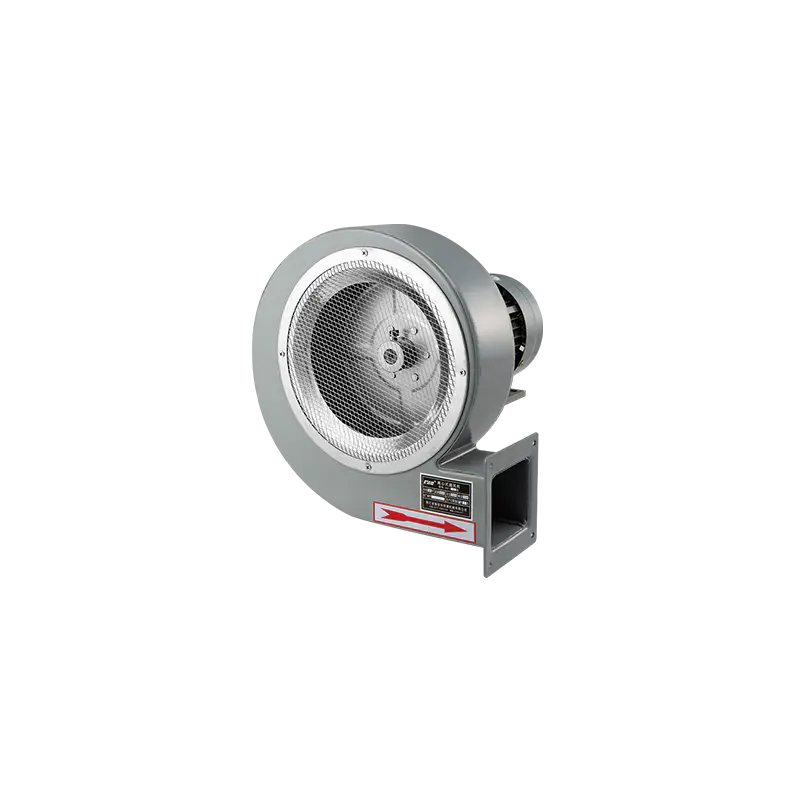
Air enters near the center of a spinning wheel and gets thrown outward by centrifugal force, picking up pressure as it moves toward the outlet. That basic mechanism is what separates this type of fan from simple axial units, which push air in a straight line without building up much resistance handling capability. Because of that design, centrifugal units tend to hold their performance even when ductwork gets long or filters start clogging, which is precisely the situation many industrial processes throw at them daily.
Why Do Heavy Industries Lean On This Equipment So Often?
Processes involving dust, moisture, or particulate matter put real strain on ventilation systems. A wastewater treatment tank needs steady aeration to keep bacteria active. A cement kiln needs combustion air pushed through at a rate that keeps the flame stable. A mining operation needs stale air pulled out of underground tunnels continuously, or conditions become unsafe fast. In each case, the fan is not a side accessory, it is part of the core operation, and failure there ripples through everything downstream.
Where Does a Large Centrifugal Blower Actually Get Used?
Scale matters here. Smaller centrifugal fans handle office ventilation or light commercial exhaust just fine, but once a facility needs to move air against serious static pressure or across a sprawling duct network, the equation changes. That is where larger frame sizes and heavier wheel construction come into play.
A few sectors where this shows up regularly include:
- Wastewater and sewage treatment plants, where aeration basins need continuous oxygen supply to keep biological processes running.
- Cement and mineral processing facilities, where dust collection and kiln combustion both depend on consistent airflow.
- Power generation stations, particularly for draft systems that manage combustion gases and boiler efficiency.
- Metal smelting and casting operations, where furnace ventilation and fume extraction cannot afford gaps in performance.
- Grain handling and food processing lines, where pneumatic conveying relies on steady pressurized air to move material through pipework.
None of these industries can tolerate a fan that struggles under load. Downtime in an aeration basin, for instance, does not just slow production, it can damage a biological treatment process that took considerable time to establish.
Does Every Application Call for the Same Blower Configuration?
Not really, and this is where buyers sometimes get tripped up. A single stage centrifugal fan works well for moderate pressure needs, moving a decent volume of air without asking for a compact footprint. But once pressure requirements climb, a single wheel starts running out of headroom. That is when a Multistage Centrifugal Air Blower tends to enter the conversation, since stacking multiple impeller stages in sequence lets the unit build pressure progressively rather than trying to force it all through one wheel.
Pneumatic conveying is a good example. Moving grain, plastic pellets, or powdered material through a pipe network requires sustained pressure over distance, and a multistage design handles that kind of resistance more gracefully than a single stage unit pushed past its comfortable range.
How Do Buyers Decide Between Single Stage and Multistage Options?
A few practical questions tend to guide that decision:
- How much resistance does the duct or pipe network create, and does that resistance stay steady or fluctuate?
- Is the application prioritizing volume, like general ventilation, or pressure, like conveying or high pressure aeration?
- What space constraints exist on the plant floor, since multistage units often occupy a longer footprint?
- Does the process run continuously, or does it cycle on and off throughout a shift?
Getting these answers clear before contacting a supplier saves time on both sides and usually results in a better fitted recommendation.
A Side By Side Look At Common Blower Types
| Blower Type | Typical Pressure Range | Common Use Case | Footprint |
|---|---|---|---|
| Single Stage Centrifugal | Moderate | General ventilation, dust collection | Compact |
| Multistage Centrifugal Air Blower | Elevated; built progressively | Pneumatic conveying, aeration, high-pressure supply | Longer; sequential stages |
| Axial Fan | Low | Simple air movement, cooling | Slim, inline |
| Large Centrifugal Blower | Wide range depending on wheel size | Heavy industrial process air, kiln draft, large-scale aeration | Substantial; built for continuous duty |
Looking at this comparison, the pattern becomes fairly clear. Pressure and continuous duty cycles push buyers toward the larger and multistage categories, while lighter ventilation tasks can often get by with something simpler and less costly.
What Happens When the Wrong Blower Gets Installed?
This part rarely gets discussed openly, but it happens more than people admit. A fan sized too small for the application ends up running near its limit constantly, which shortens bearing life and increases energy draw. One sized too large, on the other hand, wastes power and can create noise or vibration issues that were never part of the original design intent. Either mistake costs money over time, and correcting it after installation usually means downtime nobody planned for.
Engineers who have been through this once tend to get far more careful about static pressure calculations and duct layout before ordering equipment the second time around. It is one of those lessons that sticks.
Can Material Construction Change Which Applications Suit a Given Unit?
Yes, and this detail sometimes gets overlooked during early sourcing conversations. A blower handling clean, dry air can often use standard steel construction without issue. But once the airstream carries corrosive fumes, high moisture, or abrasive particulate, wheel and housing materials need to hold up against wear and chemical attack. Stainless steel or specially coated components show up frequently in wastewater, chemical processing, and certain food grade applications where hygiene and corrosion resistance both matter.
Skipping this consideration to save on upfront cost tends to backfire once the unit starts showing pitting or wear far earlier than expected.
How Should a Buyer Approach Sourcing This Equipment?
Reaching out to a manufacturer with vague specifications rarely produces a fan that fits well. A more productive approach usually involves gathering a handful of details beforehand:
- Required airflow volume and the pressure the system needs to overcome.
- Operating environment, including temperature, humidity, and any corrosive or abrasive elements present.
- Duty cycle, meaning whether the unit runs continuously or intermittently.
- Available installation space and any noise restrictions tied to the facility location.
Suppliers who ask these questions upfront generally deliver equipment that performs as expected rather than something that needs modification after the fact.
Bringing It All Together For Buyers Weighing Their Options
Choosing the right blower for an industrial process is not really about picking whichever unit looks the powerful on a spec sheet. It comes down to matching pressure, volume, environment, and duty cycle to a design built for that combination, whether that means a compact single stage fan for straightforward ventilation or a Large Centrifugal Blower engineered for sustained heavy duty airflow across demanding industrial conditions. Buyers who take the time to define their operating parameters before reaching out tend to end up with equipment that performs reliably for years rather than something that needs early replacement. Ruian Chuangbo Machinery Co., Ltd. works with industrial buyers navigating exactly these decisions, and sharing your process details or duct layout is a reasonable starting point if you are weighing whether a single stage, multistage, or larger frame configuration fits your operation.
