


Ruian Chuangbo Machinery Co., Ltd. is specialized in manufacturing of machinery parts.
When a slitting line unexpectedly stutters mid-run, or when a rewinding roll slips and misaligns the web, engineers rarely trace the problem back to the shaft — at least not right away. Yet the Pneumatic Air Shaft sitting at the center of that process carries more engineering decisions than many people realize. Selecting one without carefully evaluating load capacity and torque transmission behavior is one of the more common reasons production lines fall short of expected output quality. Understanding what those two parameters actually mean in a real operating environment, and how they interact with each other, is where better decisions begin.
Why Load Capacity Is More Than a Weight Rating
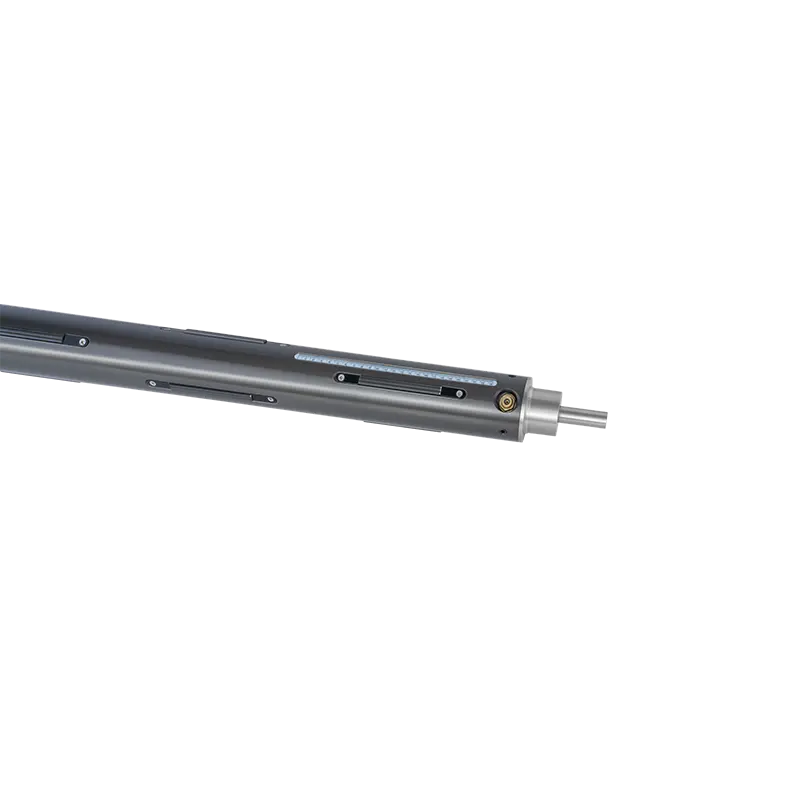
The Real Meaning of Load Capacity in a Converting Line
Load capacity in a shaft selection context refers to the distributed force the shaft must sustain across its working span when holding a roll under tension. It is not simply a question of how heavy the roll is when stationary. During acceleration, braking, and tension changes, the effective force on the shaft shifts dynamically — sometimes significantly above the nominal roll weight. Engineers who size a shaft purely against static roll weight often end up with a unit that performs adequately in testing but struggles under real production conditions.
Shaft diameter, body length, bearing span, and internal structure all interact to determine how well the shaft distributes and resists bending under load. Longer shafts, particularly those running unsupported across wide rolls, are especially sensitive to this. A shaft that holds without issue at low speed may develop noticeable deflection at higher running speeds, which introduces runout and affects web tension control.
How Air Pressure Relates to Grip, Not Just Inflation
A common misunderstanding is treating air pressure as the main indicator of load capacity. Pressure determines how firmly the bladder expands against the core — that is, it governs the frictional grip available for torque transmission. But pressure alone does not define the mechanical load the shaft body can handle. Those are separate functions, governed by different aspects of the shaft's construction.
What pressure does affect is how well the shaft holds the core during dynamic load fluctuations. Insufficient pressure leads to core slip under tension spikes. Overpressure accelerates wear on the bladder and the core bore. Getting pressure right requires knowing not just the roll weight, but the inertia involved during speed changes and the tension profile of the application.
Torque Transmission: Where Most Selection Errors Occur
Friction-Based Grip and Its Limitations
The majority of Pneumatic Air Shafts transmit torque through friction between an expanded bladder and the inner surface of the paper or film core. When the bladder inflates, it pushes outward uniformly against the core bore, creating a clamping force. The torque the shaft can deliver without slip depends on the friction coefficient of the bladder surface, the contact area, and the applied pressure.
This works well under steady-state conditions with consistent core material and clean contact surfaces. The challenges appear during startup, when inertia demands a high breakaway torque that may briefly exceed the friction capacity. Contamination — dust, moisture, release agents from film — reduces the effective friction coefficient and lowers the slip threshold unpredictably.
What Changes With a Multi Bladder Air Shaft
A Multi Bladder Air Shaft distributes the expansion force across several independent bladder segments rather than a single continuous one. The practical effect is a more even contact pressure around and along the core bore. Under heavy loads or with cores that have slight dimensional variation, this distribution reduces the risk of localized slip.
In applications involving wide rolls, high inertia, or sensitive web materials, the behavior difference between a single-bladder and a multi bladder configuration becomes noticeable. The multi-segment approach offers more consistent torque delivery and tends to perform with greater stability during speed changes. For applications where torque consistency directly affects output quality — gravure printing, precision slitting, specialty film rewinding — the construction difference carries real consequences.
Key and Lug Systems as an Alternative
Some heavy-duty applications use mechanical engagement systems rather than relying entirely on friction. Lug-type shafts deploy expandable elements that seat into slots or notches in the core, creating a positive mechanical lock. This approach removes the dependency on friction entirely and allows for more reliable torque transmission at higher load levels.
The tradeoff is that lug systems require cores with compatible profiles, which limits material flexibility. They also introduce different wear patterns and require more attention to core concentricity. Selecting between friction and mechanical engagement depends heavily on the core type, the torque demand, and the allowable production complexity.
How Air Shaft Parts Influence Long-Term Performance
Bladder Tubing Aging and Torque Loss
The condition of the Air Shaft Bladder tubing is one of the more overlooked factors in maintaining consistent torque transmission over time. Bladder materials harden, crack, or lose elasticity with age and thermal cycling. As this happens, the bladder no longer expands evenly, and contact pressure across the core bore becomes uneven. The shaft may still hold the roll — but the torque margin shrinks, and the risk of slip under tension variations increases.
Scheduled inspection of bladder tubing condition is a maintenance practice that directly protects torque reliability. Air Shaft Parts, including bladder assemblies, end plugs, and valve stems, are subject to wear patterns that differ based on how aggressively the shaft is used and how often it is cycled through inflation and deflation. Tracking wear across these components, rather than waiting for a failure event, extends service intervals and prevents unplanned downtime.
Seal Wear and Its Effect on Pressure Consistency
Even small leaks at seals or valve connections cause pressure to drop gradually during a production run. The result is a slow reduction in grip force that may go unnoticed until a slip event occurs. Maintaining seal integrity across all Air Shaft Parts is therefore not just a maintenance task — it is a direct input into torque transmission reliability. Replacement intervals for seals should reflect the operating environment, particularly in dusty or humid conditions where degradation occurs faster.
A Practical Comparison: Shaft Construction Types
The following table outlines key differences across common shaft configurations to support selection decisions:
| Shaft Type | Torque Transmission Method | Load Range | Core Compatibility | Typical Application |
|---|---|---|---|---|
| Single Bladder | Friction via uniform inflation | Light to medium | Standard cores | General film, foil rewinding |
| Multi Bladder Air Shaft | Distributed friction across segments | Medium to heavy | Standard and variable cores | Wide rolls, precision slitting |
| Lug / Key Type | Mechanical engagement | Heavy | Slotted cores only | Heavy paper, board converting |
| Expanding Sleeve | Friction via radial sleeve | Medium | Standard cores | Packaging, label converting |
Matching Shaft Selection to Operating Conditions
Steps for Evaluating Load and Torque Requirements
A systematic approach avoids the errors that come from over-relying on catalog specifications alone:
- Define the roll parameters — weight, diameter, and width at both empty and full-roll conditions.
- Identify the dynamic load profile — how quickly the line accelerates and decelerates, and whether tension variations are expected during running.
- Assess the core material — bore diameter tolerance, surface condition, and whether the core is slotted or plain.
- Calculate the torque requirement — based on the tension setting and the roll radius at the expected operating range.
- Apply a safety margin — rather than selecting a shaft rated exactly at the calculated requirement, allow headroom for tension spikes and inertial loads.
- Consider environmental factors — temperature, humidity, and contamination potential all affect bladder and seal performance over time.
Does Shaft Origin Affect Selection Logic?
The source of a shaft — whether domestic or a China Air Shaft from a specialized manufacturer — does not fundamentally change the selection criteria. Load capacity and torque transmission requirements are governed by the application, not the supplier. What does vary is the degree to which a supplier can accommodate non-standard specifications, including shaft length, diameter, bladder configuration, and surface treatment.
Working with manufacturers who offer OEM customization is particularly relevant for heavy-duty or unusual applications where catalog units do not match the working requirements. The selection criteria remain the same; the question is whether the supplier can produce a shaft built to those criteria.
Avoiding Common Selection Mistakes
Oversizing Versus Undersizing
Both directions create problems. Oversizing adds unnecessary weight and rotational inertia, which affects line dynamics and increases stress on bearings and drive components. Undersizing risks deflection, premature wear, and slip events under load. The right sizing approach focuses on the actual operating envelope rather than defaulting to the largest available option.
Ignoring Dynamic Load in Favor of Static Load
Static roll weight is the easiest number to find, but it is only part of the picture. Shafts that are correctly sized for static weight but not for dynamic loading fail under operating conditions. Acceleration phases, tension spikes during splicing, and braking loads all create momentary forces that exceed the static case. These need to be included in the selection evaluation.
Treating Shaft Selection as a One-Time Decision
Shaft performance changes with use. Bladder tubing wears, seals degrade, and surface finishes on the shaft body accumulate wear. A shaft that was well-matched to the application at installation may no longer perform the same way after extended service without inspection. Building a maintenance plan that tracks the condition of key Air Shaft Parts is part of managing long-term production reliability.
Selecting a Shaft That Holds Up in Production
Getting load capacity and torque transmission right in shaft selection is not about finding a unit with the largest stated rating. It is about understanding the real forces at work in the application, matching the shaft construction to those forces, and maintaining the components that determine performance over time. A Multi Bladder Air Shaft may offer stability advantages in one application, while a simpler friction-grip design performs reliably in another. The differences matter, and they are worth working through before committing to a specification.
For converting and processing operations where shaft performance directly affects output quality — slitting lines, film rewinding, foil processing, and packaging machinery — the investment in careful selection pays off through reduced slip events, longer component service life, and more consistent tension control. Evaluating Air Shaft Bladder tubing condition, seal integrity, and pressure maintenance as part of regular production maintenance keeps those gains from eroding over time. If you are working through a shaft selection decision or need a shaft built to a specific load and torque requirement, Ruian Chuangbo Machinery Co., Ltd. offers engineering support and customized shaft manufacturing to match your application's actual operating conditions — reach out to discuss your requirements directly.
