


Ruian Chuangbo Machinery Co., Ltd. is specialized in manufacturing of machinery parts.
Roll slippage, inconsistent tension, and vibration mid-run are not random events in a slitting or rewinding operation — they trace back to the shaft holding the roll. When that component does not grip evenly, does not inflate to a consistent pressure, or has degraded internal components, the downstream effects show up in material quality long before anyone thinks to check the shaft itself. A Pneumatic Air Shaft is the functional interface between the machine spindle and the roll core, and its design determines how well the machine can control tension, maintain alignment, and run at production speed without interruption. Selecting the right one for a slitting rewinder is a technical decision with direct production consequences.
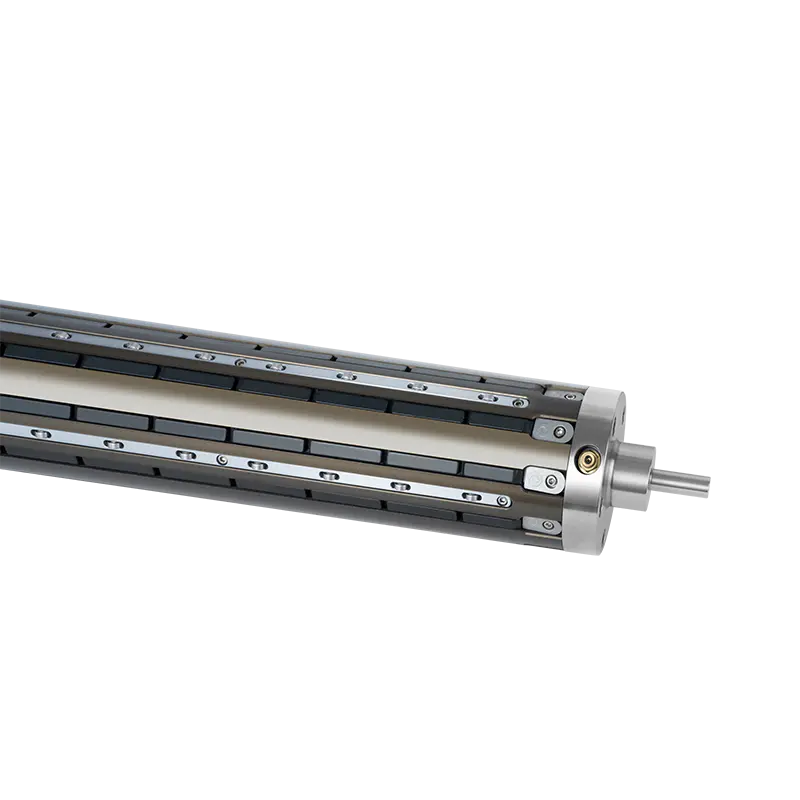
What Does a Pneumatic Air Shaft Do in a Slitting Rewinder?
The Core Mechanical Function
An air shaft holds a roll core onto the machine spindle by expanding outward when pressurized. Compressed air enters the shaft through a valve, inflates an internal bladder or extends a set of keys or strips, and the outward force locks the core in position. When deflated, the core can be loaded or removed freely. The grip it creates is what the tension control system acts on. If the shaft holds unevenly — more pressure on one side than the other, or inconsistent contact across the core length — the tension signal the machine receives does not accurately represent what is happening at the material web. Slitting precision and rewinding consistency both depend on the shaft behaving predictably at every point of contact with the core.
Why Standard Shafts Fall Short at High Speed
At low production speeds, a shaft with minor pressure inconsistency or slight mechanical wear may perform adequately. As speed increases, the margin for error shrinks. Vibration that was previously negligible becomes a source of web wander. Uneven grip that caused minor tension variation at slow speed causes visible defects at high speed. Shaft selection becomes more consequential as machine throughput demands increase.
Types of Pneumatic Air Shafts Used in Slitting Rewinders
MULTI
Multi Bladder Air Shaft
A Multi Bladder Air Shaft uses several independent inflatable bladders distributed around the shaft's circumference rather than a single central tube. When pressurized, each bladder expands outward simultaneously, creating contact points distributed evenly across the core's inner surface. The advantage is pressure distribution. Because no single bladder carries the full expansion load, the grip is more uniform, and the shaft can handle heavier rolls or higher-speed operation without the pressure concentration that degrades single-element designs over time. The bladder tubing in these designs is the wear element — it contacts the core directly and absorbs the load cycles — so bladder quality determines the shaft's service life. Multi bladder designs are the standard choice for demanding applications: film slitting, foil rewinding, and any process where roll weight, run speed, or tension consistency requirements are high.
KEY
Key Type Air Shaft
Key type shafts use a mechanical key system: internal air pressure pushes a set of keys radially outward through slots in the shaft body. The keys contact the core rather than a flexible bladder. The design is simpler and the shaft body itself is more robust, but the contact surface is concentrated at the key positions rather than distributed around the circumference. For lighter materials, lower speeds, and applications where shaft simplicity and ease of maintenance are prioritized over full grip uniformity, key type shafts remain a practical and cost-effective choice. Their limitation shows up in heavy-roll applications where the concentrated contact pressure at the key positions can deform thinner cores or cause localized grip variation.
STRIP
Strip Type Air Shaft
Strip type shafts use a series of flexible rubber or composite strips that expand outward under air pressure. The expansion pattern provides broader contact than keys but is less uniformly distributed than a multi-bladder system. Strip type shafts are suited to lightweight roll materials and lower-tension applications where even bladder-based systems would be more than the process requires.
How Shaft Type Affects Slitting Rewinder Performance
The choice of shaft design is not just a component selection — it determines how the machine behaves under production conditions.
Tension Stability Across Width
Tension uniformity across the web width depends on the shaft gripping the core at the same force from one end to the other. A Multi Bladder Air Shaft with properly functioning bladders achieves this more consistently than a key type shaft, because the multiple contact points equalize pressure distribution along the core. On wide webs where tension variation between the center and edges affects winding quality, this consistency is measurable.
Vibration at High Speed
A shaft that grips the core asymmetrically — either from uneven bladder pressure or worn keys — creates an imbalance that generates vibration as the roll spins. That vibration travels into the web and manifests as tension oscillation, edge wander, or in severe cases, wrinkling. Shaft selection and maintenance condition together determine whether vibration is a background characteristic of the machine or an intermittent production problem.
Core Compatibility
Paper cores, plastic cores, and cardboard cores all have different wall thicknesses and stiffness characteristics. A shaft that works reliably on a thick paper core may deform a thin plastic core if the grip pressure concentrates rather than distributes. Multi bladder designs tolerate a wider range of core types because the distributed contact pressure is lower at any single point.
Multi Bladder vs Key Type: A Direct Comparison
Both shaft types serve real production needs. The comparison below reflects differences in how they perform across the variables that matter in slitting and rewinding applications.
| Feature | Multi Bladder Air Shaft | Key Type Air Shaft |
| Contact distribution | Even, circumferential | Concentrated at key positions |
| Grip uniformity | High | Moderate |
| Suitable roll weight | Heavy | Light to medium |
| Performance at high speed | Stable | Adequate at lower speeds |
| Core compatibility | Wide range | Limited for thin cores |
| Maintenance focus | Bladder tubing replacement | Key mechanism cleaning and inspection |
| Relative cost | Higher | Lower |
| Service life driver | Bladder material quality | Key and slot wear |
When to Choose Multi Bladder
- Roll weight is substantial
- Production speed is high
- Web material is sensitive to tension variation
- Core material is relatively thin or deformable
- Process consistency requirements leave little tolerance for tension oscillation
When Key Type Is Sufficient
- Roll weight is moderate and speed is within the shaft's rated range
- The core material is robust enough to tolerate concentrated contact pressure
- Budget constraints make the simpler design preferable
- Maintenance capability is available to keep the key mechanism clean and functional
Air Shaft Parts and What Affects Their Service Life
Bladder Tubing
In bladder-type shafts, the Air Shaft Bladder Tubing is the component that determines how long the shaft performs reliably. It inflates and deflates with every production cycle, contacts the core under pressure, and absorbs the mechanical stresses of both rotation and loading. Bladder tubing made from lower-quality rubber compounds degrades faster under these conditions — it develops micro-cracks, loses elasticity, and eventually fails to seal completely. Buyers evaluating shaft suppliers consistently identify bladder material quality as the variable that distinguishes long-service products from short-service ones. A shaft with high-quality bladder tubing may cost more upfront but requires fewer replacement cycles over the machine's operating life.
The Valve System
The air valve at the shaft end is the single point through which all inflation and deflation cycles occur. A valve that does not seal cleanly will allow slow air leakage, which causes the shaft to lose grip gradually during a production run. In high-speed operation, this manifests as increasing tension variation as the run progresses — a symptom that is often misattributed to the machine's tension control system rather than the shaft's valve. Valve condition should be inspected at regular intervals. Replacement valves are standard Air Shaft Parts and are straightforward to install, making them a practical maintenance item rather than a reason to replace the entire shaft.
Shaft Body and Tolerances
The body of the shaft — typically aluminum alloy or steel depending on the load requirements — must maintain dimensional tolerances across the operating temperature range. A shaft body that deflects under heavy roll weight changes the contact geometry between the bladders or keys and the core, which redistributes the grip pattern in ways that affect tension uniformity. Shaft body material quality and manufacturing tolerance directly affect how predictable the shaft behaves under load. These are factors that are difficult to assess from a product description but become apparent in use, particularly at the upper end of the shaft's load range.
What to Evaluate When Choosing a Pneumatic Air Shaft Supplier
PREC
Manufacturing Precision and Quality Verification
Dimensional tolerances in shaft manufacturing determine how consistently the shaft performs. A supplier whose manufacturing process includes documented inspection of shaft concentricity, bladder seating dimensions, and valve fit provides a more reliable product than one where quality is assessed only at the finished product level. Asking a supplier to provide tolerance specifications and inspection process documentation is a reasonable part of the evaluation process. Suppliers with the manufacturing depth to provide this information are typically the ones whose products perform consistently across production batches.
BLAD
Bladder Technology and Material Specification
The bladder compound used in an air shaft determines its durability under inflation cycles and contact stress. Suppliers who can specify the rubber compound, its operating temperature range, and its resistance to the solvents or chemicals present in the operating environment are better positioned to match the shaft to the application than those who describe bladder materials only in general terms. Bladder tubing for replacement should also be available from the supplier. A shaft with strong initial performance but no reliable source of replacement bladders creates a maintenance problem that becomes more acute as the shaft ages.
CUST
Customization Capability for Machine Compatibility
Slitting and rewinding machines vary considerably in spindle diameter, shaft length, and core inner diameter requirements. Suppliers who can produce shafts to customer-specified dimensions — including custom bladder arrangements, valve placement, and body material — provide better fit to specific machine configurations than standard catalog products. OEM capability also matters when the application involves non-standard core dimensions or unusual operating conditions. A supplier with genuine engineering capability can adapt the shaft design to the requirement rather than asking the buyer to adapt their process to the standard product.
EXP
Export Experience and Supply Reliability
For buyers sourcing internationally, a supplier's experience with export documentation, quality standards for destination markets, and production scheduling for international orders reflects their ability to function as a reliable supply chain partner rather than simply a one-time vendor. Consistent delivery timelines and the ability to maintain quality across repeat orders over time are the real measures of supply chain reliability.
Why China Air Shaft Suppliers Are Widely Sourced
Manufacturing Scale and Component Access
China's industrial manufacturing infrastructure supports pneumatic shaft production at a scale that reduces per-unit costs significantly compared to small-volume production in other regions. Access to aluminum alloy extrusion, precision machining, and rubber compounding within integrated supply chains means that component quality and production cost can both be managed within the same supplier relationship. For buyers sourcing China Air Shaft products, this translates to a practical combination of cost efficiency and customization flexibility that is difficult to replicate through suppliers with smaller manufacturing bases.
Cost-to-Quality Positioning
The range of quality among Chinese shaft manufacturers is wide. At one end, suppliers using lower-grade bladder compounds and less precise machining produce shafts that meet a price point but require more frequent maintenance and earlier replacement. At the other end, manufacturers with genuine technical depth and quality management systems produce shafts that compete on service life and consistency with products from higher-cost manufacturing regions. The evaluation process for Chinese suppliers therefore benefits from focusing on manufacturing process documentation, material specifications, and references from current buyers rather than on price alone.
OEM and Specification Flexibility
Many Chinese shaft manufacturers have developed strong OEM capability through years of supplying original equipment manufacturers who specify non-standard dimensions and configurations. This experience translates directly to the ability to handle custom orders from end users and distributors who need shafts matched to specific machine models or process requirements.
Common Failure Modes and How to Prevent Them
Slow Air Leakage
Gradual pressure loss in a shaft that holds adequate pressure at the start of a run typically indicates either valve seal degradation or early-stage bladder failure. The valve is straightforward to check and replace. If valve replacement does not resolve the issue, the bladder tubing requires inspection and likely replacement.
Preventive practice: establish a routine pressure check at the start of each shift. A shaft that holds its set pressure without measurable drop is performing correctly. One that requires re-inflation mid-shift has a sealing issue that will worsen with continued use.
Uneven Core Grip
When the roll does not run concentrically — wobble visible at the roll edge, or tension variation across the web width — uneven grip along the shaft length is a likely contributor. In multi bladder shafts, this often indicates that one or more bladders have lost elasticity or developed a leak. In key type shafts, it may indicate key wear or debris in the key slots preventing full extension. Inspecting the shaft off-machine with a pressure gauge monitoring each bladder zone identifies which section is underperforming. For key type shafts, cleaning and inspecting the key slots after the shaft is deflated resolves many grip distribution issues.
Sudden Bladder Failure
Bladders that fail suddenly rather than gradually typically indicate overloading beyond the shaft's rated capacity, or bladder compound degradation from chemical exposure in the operating environment. Matching the shaft specification to the actual roll weight and ensuring the bladder material is compatible with any solvents or coatings in the process prevents the majority of sudden bladder failures.
Questions Buyers Commonly Ask
Q1
What is a Pneumatic Air Shaft used for in slitting machines?
It holds the roll core onto the machine spindle through pneumatic expansion, maintaining grip during winding and unwinding operations. The shaft transmits the tension force from the machine's drive system to the roll, and its grip consistency determines how accurately the tension control system can manage web tension.
Q2
What is a Multi Bladder Air Shaft?
A design in which multiple independent inflatable bladders are distributed around the shaft circumference. When pressurized, all bladders expand simultaneously to create even contact with the roll core's inner surface. The distributed contact pattern provides more uniform grip than single-element designs, which makes this type better suited to heavier rolls and higher production speeds.
Q3
How does air shaft design affect rewinding quality?
Grip uniformity determines tension consistency. A shaft that grips the core unevenly creates a tension signal that does not accurately reflect actual web conditions. The tension control system responds to this signal and makes corrections that introduce rather than reduce variation. Shaft design is therefore upstream of the tension control system in terms of its effect on winding quality.
Q4
What are the key Air Shaft Parts that require maintenance?
The bladder tubing, the air valve, and the key or strip mechanism depending on shaft type. Bladder tubing is the primary wear element and the component whose quality directly affects service life. Valves require periodic inspection for sealing integrity. Key and slot assemblies require cleaning to prevent debris from limiting key extension.
Q5
When should Air Shaft Bladder Tubing be replaced?
When the bladder no longer holds pressure consistently across the full inflation cycle, or when visible cracks, delamination, or permanent deformation appear on the bladder surface. Operating a shaft with degraded bladder tubing accelerates failure and risks roll drop if the bladder fails mid-production.
Q6
How do you choose between a multi bladder shaft and a key type shaft?
The roll weight and production speed are the primary selection factors. Multi bladder designs suit heavier loads and higher speeds. Key type designs are appropriate for lighter applications where the simpler mechanism and lower cost offset the reduced grip uniformity. Core material is a secondary consideration — thin or deformable cores are better matched to the distributed contact of a bladder design.
Q7
What makes a China Air Shaft supplier reliable?
Manufacturing precision documentation, material specification transparency, bladder compound quality, and export experience are the practical differentiators. Suppliers who can provide dimensional tolerance records, specify their bladder materials, and supply replacement parts on a consistent schedule are operating at a level that supports long-term sourcing relationships rather than one-time transactions.
Q8
Can air shafts be customized for specific machine models?
Yes. Shaft diameter, body length, bladder arrangement, valve position, and body material are all configurable parameters. Suppliers with OEM capability can produce shafts matched to specific spindle dimensions and core sizes, which matters when the standard product range does not fit the machine configuration.
Shaft selection for a slitting rewinder is a decision that affects production consistency every shift. The Pneumatic Air Shaft type — whether multi bladder, key, or strip — determines how evenly the roll is held, how reliably tension is maintained across the web width, and how frequently maintenance is required to keep the shaft performing within specification. Bladder quality, valve reliability, and shaft body precision all contribute to service life in ways that are not visible in a product photograph but become apparent across months of production use.
About the Manufacturer
For buyers sourcing shaft components or complete shaft assemblies for slitting and rewinding applications, Ruian Chuangbo Machinery Co., Ltd. supplies pneumatic shafts across multiple designs with engineering support for application matching, custom dimension production, and replacement Air Shaft Parts including bladder tubing and valve assemblies. Engaging their technical team with your specific machine parameters and production requirements is the practical path toward shaft selection that holds up in actual production conditions.
