


Ruian Chuangbo Machinery Co., Ltd. is specialized in manufacturing of machinery parts.
A roller on a continuous line touches film, paper, fabric, or cartons thousands of times an hour. Its surface takes friction, moisture, cleaning agents, and the occasional knock during maintenance. An Aluminum Tube Roller keeps its low weight through all of this, but bare aluminum can scratch and dull under that treatment. Anodizing improves the surface of an Aluminum Roller Tube without adding the mass of a heavier material. The gains depend on alloy, process, and working conditions, so each benefit below comes with the checks that make it real.
What Anodizing Does to an Aluminum Roller Tube
Anodizing is an electrochemical treatment. The aluminum part sits in an electrolyte bath and is connected as the anode. Electric current then builds a controlled layer of aluminum oxide on the surface.
That layer grows out of the metal itself. Paint and plated coatings sit on top of the part and can chip or peel at an edge. An anodic layer is bonded to the substrate, so it is far less likely to lift away. For a roller, this matters because the outer surface meets the product, the machine, and the plant atmosphere every day.
Several steps shape the result:
- Cleaning and degreasing before treatment
- Alloy choice and the machining done beforehand
- Oxide layer formation
- Sealing of the surface pores
- Inspection after treatment
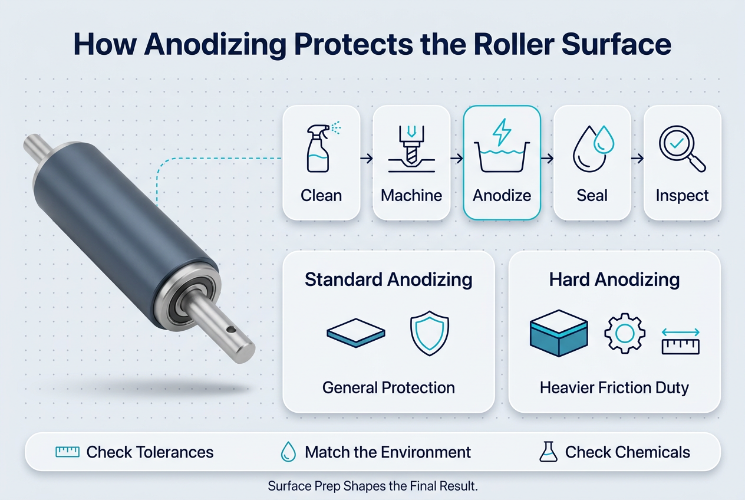
If one step is rushed, the finished roller shows it as uneven color, a patchy surface, or weak protection. A shop that machines, cleans, and anodizes under one coordinated plan usually avoids these problems.
Main Advantages of Anodizing an Aluminum Tube Roller
Corrosion Protection
Aluminum forms a thin natural oxide film when exposed to air. In a damp plant, or where cleaning chemicals are used, that film may not be enough. Anodizing builds a thicker, more controlled layer that shields the metal underneath.
Practical benefits include better resistance to moisture, protection against certain corrosive substances, less surface oxidation, and a more uniform appearance over time. Sealing closes the pores in the oxide layer, so the sealing method should match the environment. A roller in a washdown area needs a different specification from one running in a dry packaging hall.
Anodizing does not make aluminum immune to every chemical. Strong alkaline cleaners, for example, can attack the layer. Ask which cleaning agents the plant uses before the finish is chosen.
Surface Hardness
Untreated aluminum is soft compared with steel. A dropped wrench or a rough carton edge can leave a scratch, and that scratch can later mark the product passing over it. The anodic layer is hard, so the surface resists scuffing while the roller body stays light.
Hard anodizing goes further for demanding duty. It also grows thicker, which changes dimensions. Tolerances on bearing seats and precision features must be reviewed before this treatment is selected.
Wear Resistance
Constant contact with films, paper, and fabrics wears a roller surface down gradually. A properly specified anodized layer holds up better against abrasion and keeps the surface condition steadier through long production runs. This suits:
- Web guiding systems
- Printing and converting machines
- Packaging lines
- Film handling equipment
- Industrial conveyors
Anodizing slows wear but does not stop it. Check the contact material, the pressure, and any sliding action against the chosen finish.
Consistent Product Handling
Thin film and coated paper react to the state of the roller. Scratches, oxidation, or uneven spots can mark the material or change how it tracks across the machine. A controlled anodized surface gives more predictable contact and a uniform look from one roller to the next.
Surface preparation decides much of this. Machining marks, oil residue, and contamination all show through the finished layer. Treat anodizing as part of the full production sequence, not a last step added at the end.
Service Life and Maintenance
Replacing a roller costs more than the part itself. Downtime, installation labor, and realignment all add up. When corrosion and surface wear account for much of the damage, anodizing can help extend service life between repairs and make maintenance planning easier.
Actual life depends on loads, contact material, roller design, and upkeep. Specifying the right treatment early avoids paying for more than the application needs. It also keeps spare-part planning simple, since rollers wear at a more predictable pace.
Standard Anodizing or Hard Anodizing for an Aluminum Roller Tube
Not every roller needs the same treatment. The choice follows the duty the roller will see.
| Aspect | Standard Anodizing | Hard Anodizing |
|---|---|---|
| Main purpose | General surface protection | Greater durability |
| Hardness | Improved | Generally higher |
| Wear resistance | Fits routine conditions | Fits demanding contact |
| Typical use | General industrial rollers | Rollers facing heavy friction |
| Selection focus | Environment and appearance | Friction and mechanical demand |
When Standard Anodizing Fits
Standard anodizing suits routine material handling and packaging equipment. The goals there are corrosion protection and a consistent finish, and loads on the surface stay moderate. Color options also make it useful where rollers are identified by finish.
When Hard Anodizing Is Worth Considering
Hard anodizing suits repeated friction, abrasive contact, or rollers that guide rough materials. The thicker layer changes diameters, so engineers should plan for dimensional growth. This is particularly relevant for rollers with close tolerances, bearing interfaces, or precision-machined features. Some manufacturers machine the part to a smaller size before treatment to account for dimensional growth, while others use grinding to adjust it afterward. The chosen approach should be agreed upon before production starts.
Anodized Aluminum Rollers in Industrial Use
Suitability depends on what the roller touches and which machine holds it.
- Printing and packaging. Rollers guide paper, film, and packs through the line. Choose the finish according to how sensitive the material is, since a finish that works for cartons may be wrong for thin film.
- Film and plastic processing. Controlled movement matters here. Contact pressure, film type, and possible contamination should guide the surface specification, because a mark on the roller can transfer to the product.
- Textile machinery. Fabric contact is repeated, and fiber buildup is possible. The finish should suit the sensitivity of the fabric and allow easy cleaning.
- Automated material handling. Lightweight rollers with a protected surface support dependable operation and easier maintenance planning. This suits sorting lines and transfer stations that run for long shifts.
Choosing an Aluminum Tube Roller Step by Step
A clear sequence keeps the specification complete.
- Review the environment. Note indoor or outdoor use, moisture, cleaning chemicals, temperature, abrasive or delicate contact, and how often the roller runs. A roller that runs only a few hours a day faces different demands from one that runs around the clock.
- Define the surface treatment. Match standard or hard anodizing to the real duty. Agree on layer type, sealing method, and finish before production starts.
- Confirm dimensions and precision. Specify outer and inner diameter, wall thickness, length, straightness, concentricity, and bearing interfaces. Review them together with the finishing plan.
- Check manufacturing capability. Ask whether the supplier works from your drawings, how dimensional change after anodizing is handled, how batch consistency is kept, and what inspection is carried out.
Clear answers at this stage reduce design changes later. They also help purchasing teams compare suppliers on the same terms.
Working With CBB Machine on Aluminum Roller Tube Projects
Anodizing results depend on the condition of the part before treatment. Machining accuracy, cleanliness, alloy selection, and process coordination all show in the finished roller. A manufacturer familiar with industrial rollers can review these points during development.
CBB Machine welcomes inquiries for customized aluminum rollers. Prepare these details before contacting the team:
- Drawings or reference dimensions
- Machine application
- Aluminum material preference
- Surface treatment preference
- Operating environment
- Quantity and customization needs
Send them to discuss an Aluminum Roller Tube or Aluminum Tube Roller solution suited to your equipment and production schedule.
