


Ruian Chuangbo Machinery Co., Ltd. is specialized in manufacturing of machinery parts.
Ordering Air Shaft Parts without a proper pre-purchase review is one of those mistakes that tends to be expensive and inconvenient at the same time. A wrong shaft diameter, an incompatible bladder system, or a supplier who cannot hold tight tolerances — any of these can stall a production line or force a costly reorder. For procurement managers and equipment engineers working in web converting, slitting, or rewinding applications, the stakes are real. This is not about being overly cautious. It is about knowing which questions to ask before the purchase order goes out.
Shaft Dimensions Are Where Most Mistakes Happen
It sounds obvious, but dimension mismatches remain a common cause of failed air shaft installations. The issue is rarely that buyers do not check — it is that they do not check enough of them.
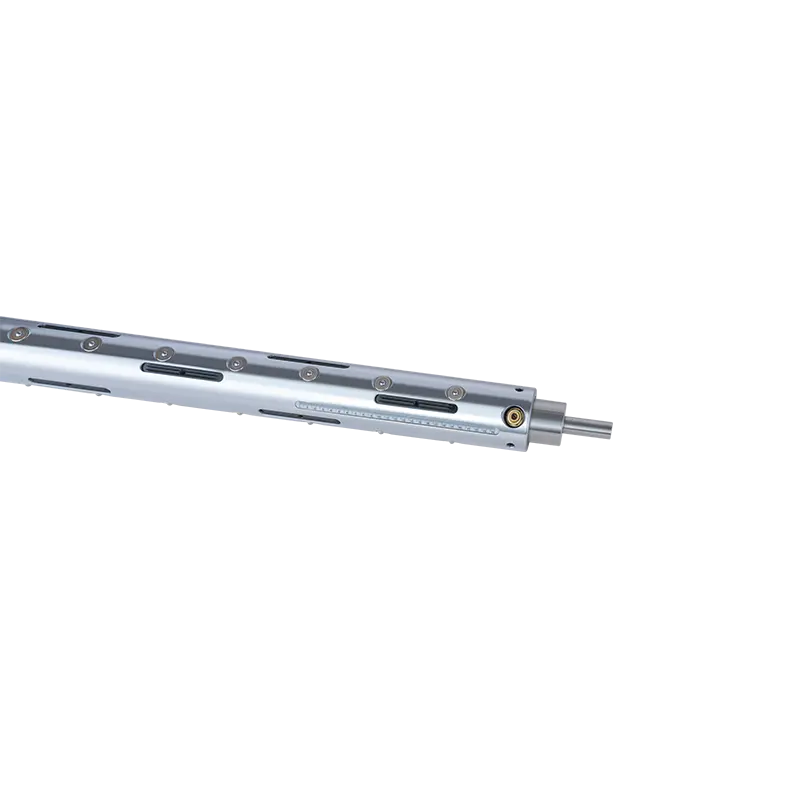
Before ordering, confirm all of the following:
- Shaft length — including any overhang or extension requirements beyond the core
- Journal diameter — the section that fits into the machine bearings; even a small deviation creates play or binding
- Core inner diameter (ID) — the bore of the roll core the shaft must grip; this varies by industry and core type
- Overall weight capacity — whether the shaft can handle the roll weight at the operating speed your machine runs
A shaft that is slightly off in journal size will wear bearings prematurely. One that is too short will not seat correctly. Neither failure announces itself immediately — which makes the damage harder to trace back to the source.
When requesting a quote, always submit a technical drawing or a filled-out dimensional sheet. Verbal descriptions are not sufficient for precision components.
Does the Shaft Type Match the Application?
Not all air shafts work the same way, and not all applications need the same design. Choosing the wrong type creates problems that no amount of quality manufacturing can fix.
Here is how different shaft types generally align with different use cases:
| Shaft Type | Typical Application | Key Characteristic |
|---|---|---|
| Lug Type Air Shaft | Paper, board, and heavier core materials | Positive mechanical locking via lugs; handles higher torque loads |
| Leaf Type Air Shaft | Film, foil, and thin flexible materials | Smooth, even core contact; reduces marking on sensitive materials |
| Multi Bladder Air Shaft | Rewinding and slitting of variable-width rolls | Independent inflation zones allow core positioning adjustments |
| Lightweight Air Shaft | High-speed converting lines | Reduced rotational inertia; suited for acceleration-sensitive processes |
If your operation runs film at high speed, a lug type shaft may grip unevenly and damage the core. If you are handling heavy paper rolls, a lightweight shaft may not offer the torque capacity you need. The application drives the structure — not the other way around.
A Pneumatic Air Shaft is a precision tool. Treating it as a generic, interchangeable component tends to cause operational problems down the line.
What About the Inflation System?
The bladder is arguably a maintenance-sensitive part of any air shaft assembly. It is what creates the gripping force, and it is what wears out. Yet many buyers spend more time confirming shaft dimensions than they do evaluating the inflation system — which is a reversal of priorities in many real-world scenarios.
When reviewing inflation systems, pay attention to:
- Bladder material — durability varies significantly across material grades; some are better suited to high-frequency inflation cycles
- Air valve design — a poorly sealed valve is a slow leak waiting to happen; check whether replacement valves are readily available
- Inflation pressure range — confirm the shaft operates reliably within your shop air supply parameters
- Sealing consistency — bladder edges must maintain even contact with the core; uneven sealing causes wobble and roll displacement
A worn or failing bladder does not always cause a catastrophic failure. More often it causes gradual quality degradation — misaligned cuts, inconsistent tension, rolls that will not track straight. By the time the problem is diagnosed, the source has been active for longer than anyone realized.
Ask the supplier about expected bladder service life under your operating conditions. A manufacturer that cannot answer that question probably cannot support you after the sale either.
How Does Shaft Material Affect Long-Term Performance?
The core shaft body is typically aluminum or steel, and the choice matters more than it might appear.
Aluminum shafts — especially those associated with lightweight air shaft designs — offer a lower mass-to-length ratio, which is valuable in applications where the machine accelerates and decelerates frequently. They are also easier to handle during roll changes. The tradeoff is surface hardness; aluminum will show wear faster under heavy loads or abrasive core materials.
Steel shafts handle higher torque, resist deformation under load, and generally outlast aluminum in demanding environments. The weight penalty is real, though, and on high-speed lines that weight translates directly into bearing stress and energy consumption.
The practical takeaway: specify shaft material based on your line speed, roll weight, and how frequently operators handle the shaft manually. Do not simply accept a default without asking why that material was chosen for your configuration.
Supplier Qualification — What to Actually Verify
Ordering Air Shaft Parts from an unqualified supplier is a gamble that rarely pays off over time. The component may look right and even perform adequately for a period. But without consistent manufacturing standards, dimensional tolerance will drift between batches, and parts ordered six months from now may not match what was delivered today.
Reasonable due diligence for a new supplier includes:
- Manufacturing capability review — does the supplier produce shafts in-house or source components from third parties? In-house control usually produces tighter and more consistent tolerances.
- Quality control documentation — can they provide inspection records, material certifications, or dimensional test reports for their products?
- Lead time reliability — what is their standard production cycle, and do they carry stock for common configurations? Downtime caused by a late spare parts shipment is a real operational risk.
- After-sales support — can they supply replacement bladders, valves, and lug components independently? A shaft that cannot be serviced becomes scrap the moment a bladder fails.
- References or application history — have they supplied shafts for your industry or machine type before?
When sourcing from a China Air Shaft manufacturer, the above checks matter just as much — sometimes more, given the logistics distances involved. Response time and communication quality during the inquiry phase often signals how responsive a supplier will be when problems arise post-delivery.
OEM and Replacement Parts: Are They Interchangeable?
This is a question worth raising directly with any supplier. Some air shaft designs use proprietary components — valve fittings, lug profiles, bladder dimensions — that are not interchangeable with other manufacturers' parts. Buying a shaft from one source and sourcing replacement components from another can cause compatibility failures even when dimensions appear to match.
Before committing to a supplier, confirm:
- Whether their shaft components follow standard industry dimensions or proprietary specs
- Whether bladder replacements and spare hardware are available independently
- Whether the shaft design allows field servicing without returning the unit to the manufacturer
This matters especially for operations that run multiple shifts or cannot afford extended downtime for parts sourcing. A Pneumatic Air Shaft with non-standard internal components creates a supply chain dependency that many buyers do not fully account for at the point of purchase.
Common Pre-Order Checklist
Before sending a purchase inquiry or confirming an order, work through the following:
Dimensional Verification
- Confirmed shaft length and journal diameter from machine drawings or physical measurement
- Core inner diameter documented for all core types in use
- Load capacity matched to roll weight and operating speed
Shaft Type Selection
- Application reviewed against lug type, leaf type, multi bladder, or lightweight configurations
- Material (aluminum or steel) selected based on application demands
Inflation System
- Bladder material and expected service life discussed with supplier
- Air valve design reviewed; replacement parts availability confirmed
- Operating pressure range verified against shop air supply
Supplier Qualification
- In-house manufacturing capability confirmed
- Quality documentation requested and reviewed
- Lead time and spare parts availability discussed
- Post-sale support and servicing options clarified
A Closing Note on Getting It Right
Procurement decisions around Air Shaft Parts tend to get rushed. Production is waiting, the machine is idle, and the pressure to get something ordered quickly is real. But skipping the checks above does not save time — it shifts the cost of the mistake to a later, less convenient moment.
Working with a manufacturer who understands the technical side of the application — not just the ability to ship a product — makes the entire process more reliable. Ruian Chuangbo Machinery Co., Ltd has developed a range of air shaft products covering lug type, leaf type, multi bladder, and lightweight configurations, with manufacturing and support structures designed for industrial operations that cannot afford guesswork in their supply chain. If your operation is evaluating new suppliers or sourcing replacement components, reaching out with your application details is a practical starting point.
